
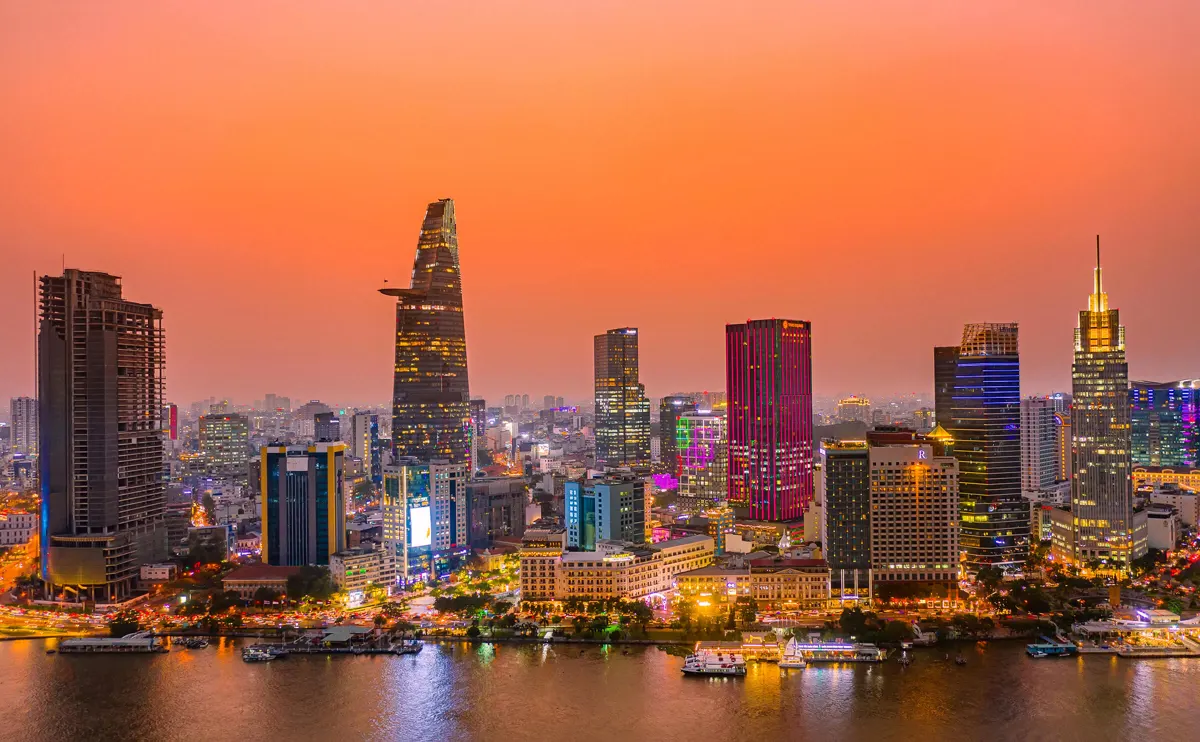
The Independence Palace, officially recognized as the Reunification Palace, is a prominent historical site situated in Ho Chi Minh City, formerly known as Saigon. This architectural landmark served as the residence and workplace for the President of South Vietnam during the Vietnam War. Its gates were famously breached on April 30, 1975, marking the conclusion of the conflict and the reunification of Vietnam.
The Historical Significance of Independence Palace
The origins of the Independence Palace trace back to 1868 when French colonial authorities began constructing a grand residence for the Governor-General of Cochinchina. This initial structure, completed in 1871, was known as Norodom Palace and served as the administrative center for the French Governor until 1887. Subsequently, it became the primary residence and office for all French Indochina Governors-General until 1945, during the period of French colonial rule.
In March 1945, Japanese forces assumed control of Indochina, transforming Norodom Palace into their headquarters in Vietnam. Following Japan's defeat in World War II in September 1945, French forces re-established their presence in Southern Vietnam, once again utilizing Norodom Palace as their administrative base. The French withdrawal from Vietnam occurred in May 1954 after their defeat at Dien Bien Phu, leading to the signing of the Geneva Agreement. This agreement temporarily divided Vietnam into two regions: the North, governed by the Democratic Republic of Vietnam, and the South, under the newly established Republic of Vietnam, supported by the United States.
With the division, Norodom Palace was renamed Independence Palace and became the official residence and office for Ngo Dinh Diem, the first President of the Republic of Vietnam, and his family. A significant event occurred in February 1962 when a rebellious bombing rendered the existing palace irreparable. President Ngo Dinh Diem then commissioned the construction of a new palace, designed by Vietnamese architect Ngo Viet Thu. Construction commenced in 1962, but Ngo Dinh Diem was assassinated in 1963, prior to its completion in 1966. The new Independence Palace subsequently served as the home and workplace for Nguyen Van Thieu from 1967 until April 30, 1975, when tanks from the North Vietnamese Army advanced through its gates, symbolizing the end of the Vietnam War and the reunification of the country.
Architectural Features of the Reunification Palace
The architectural design of the Independence Palace represents a blend of contemporary Western aesthetics with traditional Eastern influences. Architect Ngo Viet Thu thoughtfully incorporated auspicious Chinese characters into the building's overall layout and design. Consequently, when viewed from various perspectives, the palace's form is said to reflect different Chinese characters, adding a layer of cultural depth to its appearance.
The palace comprises two primary floors, two mezzanines, a rooftop terrace, and a basement. It contains approximately 100 rooms, each furnished and styled according to its specific function. These spaces include the Cabinet Room, designed for meetings and ceremonies, and the State Banquet Hall, which could host up to 100 guests for notable events. The Presidential Office served as the President's workspace, while the Presidential family's residence featured private bedrooms, a dining area, a small rock garden, and displays of unique gifts. The Ambassadors' Chamber is notable for housing the painting “Binh Ngo Dai cao” (Proclamation Of Victory), a composition of 40 smaller pieces depicting peaceful Vietnamese life in the 15th century. The basement level houses critical operational areas, including a command center and a communications department. Recreational facilities such as a library, cinema, card-playing room, entertainment lounge, and casino were also available for the President and his staff to use during leisure time.
The palace's front grounds feature an expansive oval lawn, measuring 102 meters in diameter. The verdant expanse of the grass contributes to a sense of calm and refreshment for visitors entering the premises. A semicircular lake runs along the width of the yard, adorned with lotus and water lilies, evoking the serene imagery often associated with ancient Vietnamese temples and pagodas.
Planning Your Visit to Independence Palace
The Independence Palace is conveniently located in the heart of Ho Chi Minh City's District 1, at 135 Nam Ky Khoi Nghia Street. Its central position places it within walking distance of several other prominent Saigon attractions, including the Saigon Notre Dame Cathedral, the City's Central Post Office, and the Saigon Opera House. Visitors staying in the city center can easily reach the palace by taking a leisurely walk or opting for a quicker taxi ride. For a more comprehensive understanding of the site and its context, arranging a guided city tour through a local travel agency is often recommended. When managing finances during your trip, it's helpful to understand banking services in Ho Chi Minh City.
Visitor Information Summary
| Category | Details |
|---|---|
| Address | 135 Nam Ky Khoi Nghia Street, District 1, Ho Chi Minh City |
| Opening Hours | Daily, 8:00 AM to 5:30 PM (17:30) |
| Standard Adult Entry | 40,000 VND |
| Standard Child Entry | 10,000 VND |
| Exhibit Entry (Adult) | 25,000 VND (additional for "From Norodom Palace to Independence Palace 1868 – 1966") |
| Exhibit Entry (Child) | 5,000 VND (additional for "From Norodom Palace to Independence Palace 1868 – 1966") |
| Ticket Purchase Location | Main entrance, east side of the palace's garden |
As of late 2022, these details are subject to change and should be verified prior to your visit.
Exploring the Palace's Interior Spaces
Once inside the Independence Palace, visitors can explore a multitude of rooms that offer insights into the daily life and official functions of the South Vietnamese government. The layout guides guests through various chambers, each preserved to reflect its historical purpose. From the formal reception areas to the more private presidential quarters, the palace provides a tangible connection to a critical period in Vietnamese history.
The basement, often a highlight for many, served as the command center during the war, featuring communication equipment and strategic planning rooms. This area offers a stark contrast to the more opulent upper floors, underscoring the palace's dual role as both a symbol of state and a functional wartime headquarters. Throughout the palace, informational plaques and displays provide context for the artifacts and rooms, enhancing the educational aspect of the visit. While exploring Ho Chi Minh City, many visitors also seek out unique purchases and souvenirs to remember their trip.
Nearby Attractions in District 1
The central location of Independence Palace makes it an excellent starting point for exploring other significant sites in Ho Chi Minh City's District 1. Just a short walk away, the Saigon Notre Dame Cathedral, a striking example of French colonial architecture, stands as a testament to the city's past. Adjacent to the cathedral is the historic Central Post Office, designed by Gustave Eiffel, which continues to operate as a functional post office while also serving as a popular tourist destination due to its grand interior and architectural details.
Further exploration in the vicinity might lead visitors to the Saigon Opera House, another impressive colonial-era building that hosts various cultural performances. The War Remnants Museum is also relatively close, offering a powerful and often sobering perspective on the Vietnam War through extensive exhibits of photographs, military hardware, and historical artifacts. These nearby attractions collectively provide a comprehensive overview of Ho Chi Minh City's history, culture, and architectural heritage, making the area around Independence Palace a rich destination for sightseeing.
Frequently Asked Questions
What is the Independence Palace known for?
The Independence Palace is primarily known for its historical significance as the former presidential palace of South Vietnam. It symbolizes the end of the Vietnam War and the reunification of the country when North Vietnamese tanks famously crashed through its gates on April 30, 1975.
Can visitors explore all areas of the palace?
Visitors can explore a significant portion of the Independence Palace, including many of its main rooms, the presidential living quarters, the command center in the basement, and the surrounding gardens. Some areas may be restricted for preservation or administrative reasons.
How long should I allocate for a visit to the Independence Palace?
Most visitors typically spend between 1.5 to 2.5 hours exploring the Independence Palace. This allows sufficient time to tour the various floors, examine the exhibits, and appreciate the architecture and historical context of the site.
Is photography permitted inside the palace?
Generally, photography is permitted in most public areas of the Independence Palace. However, visitors should always look for signs indicating any specific restrictions in certain rooms or exhibits. Flash photography might be discouraged to protect artifacts.
Are guided tours available at the Independence Palace?
While the palace can be explored independently with informational plaques, guided tours are often available from external tour operators in Ho Chi Minh City. These tours can provide deeper historical context and insights into the palace's role in Vietnamese history.








