
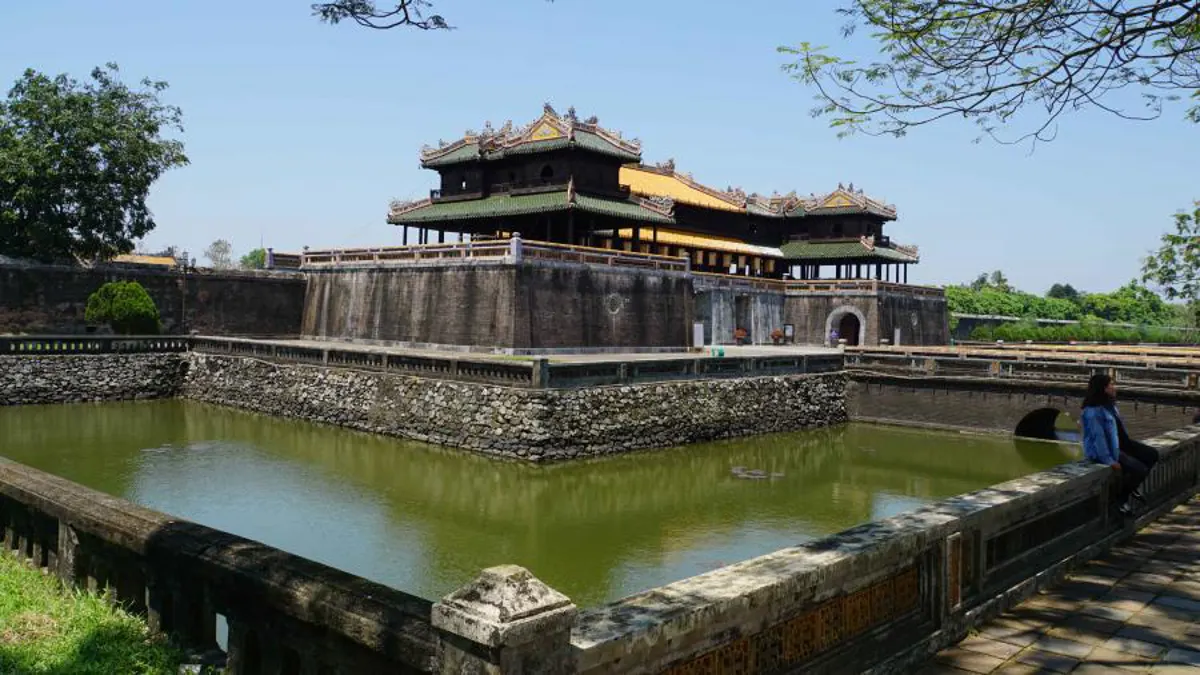
Thien Mu Pagoda is a historic Buddhist complex on the north bank of the Perfume River in Hue, established in 1601 and often regarded as a symbol of the city. The site is notable for its 21-metre Phuoc Duyen tower, an early-18th-century bronze bell, a collection of temple buildings, and memorials connected to 20th-century events.
What Thien Mu Pagoda is and why it matters
Thien Mu Pagoda began as a religious foundation ordered by the region’s early Nguyen lords in 1601. Local tradition recounts that Lord Nguyen Hoang selected the site after seeing a hill—known historically as Ha Khe—whose curve suggested a dragon turning its head, and after stories of an apparition that signalled a favourable location for a shrine. The pagoda was formally established facing the Perfume River.
Over the centuries the complex was rebuilt and expanded several times. Renovations under successive Nguyen rulers took place in the 17th and 18th centuries; a large bell was cast in 1710 and later restorations added multiple temple halls and ancillary buildings. A major storm in 1904 caused considerable damage, and the compound that visitors see today preserves a selection of structures that have survived later repairs and reconstructions.
Key features and highlights of the site
The most immediately visible landmark from the river is the Phuoc Duyen tower, completed in 1844. The octagonal tower rises seven storeys and contains Buddha images on multiple levels; a spiral stair runs up to the upper floors, where a gilded figure was recorded as formerly being displayed.
To the side of the tower stands the Dai Hong Chung bell, cast in 1710 under Nguyen Phuc Chu. The bell measures roughly 2.5 metres in height and is recorded as weighing about 2,052 kilograms, representing a significant example of period bronze work. Nearby is a carved marble turtle bearing a commemorative stele that dates to the early 18th century.
- Phuoc Duyen tower — seven-storey octagonal pagoda visible from the river.
- Dai Hong Chung bell — large bronze bell cast in 1710.
- Dai Hung shrine — main worship hall containing three Buddha figures representing past, present and future.
- Austin car relic — associated with Thich Quang Duc’s 1963 protest; preserved on site.
- Gardens, bonsai and meditation spaces — traditional monastic landscaping.
Practical tips for visiting Thien Mu Pagoda
The pagoda is located in Huong Long village on the north bank of the Perfume River, about 5 km from central Hue. Opening hours commonly cited for the complex run from 8:00 to 18:00, and there is generally no charge for entry. Visitors report that the site functions both as a place of worship and a tourist attraction, so maintaining quiet and respectful behaviour is expected.
Travel options between the city and the pagoda include motorbike, bicycle, cyclo and taxi; a scenic alternative is to take a dragon-boat from Toa Kham pier and approach along the river. Check weather patterns before you travel — read a Vietnam rainy season guide to time your visit when conditions are favourable. Practical notes:
- Dress modestly — avoid shorts or sleeveless tops while inside the complex.
- Bring sun protection or a light rain layer, depending on the season.
- Combine the visit with nearby monuments to make the most of the short journey from town.
Cultural and historical context
Thien Mu occupies a distinctive place in Hue’s religious and civic landscape. Its foundation under early Nguyen authority ties the site to the period of southern consolidation by those rulers, and inscriptions and steles on the grounds record phases of patronage and restoration through the 18th century. The complex contains several shrines and tablets that reflect traditional Mahayana practice and the memorial customs of central Vietnam.
In the 20th century the site also became connected to major political events. An Austin car on display is associated with the widely reported self-immolation of Thich Quang Duc in 1963, and the compound includes tombs and memorials for senior monastics such as Thich Don Hau. Visitors typically treat these elements as part of the pagoda’s layered historical narrative rather than strictly architectural features.
Who should include Thien Mu Pagoda on their Hue itinerary
People interested in architecture, religious history or riverside views will find Thien Mu rewarding. The complex is accessible to most travellers and can be experienced in a short visit of 30–90 minutes depending on interest in the monuments and gardens. Photographers often come for shots of the tower framed by the river, while those studying Vietnamese Buddhism value the site’s inscriptions and surviving ritual spaces.
If you plan to sample Hue cuisine after a morning at the pagoda, consider trying local specialties; guides to where to find Bun Bo Hue around the city can help you locate reputable bowls nearby. Families with older children and travellers who prefer quieter cultural sites rather than crowded attractions generally report a positive visit.
Comparisons and alternatives
Thien Mu is often visited alongside imperial and funerary sites in the Hue area. Compared with the walled Imperial Citadel, the pagoda is smaller and focused on religious practice and memorials rather than state architecture. Tomb complexes such as Minh Mang and Tu Duc offer landscaped mausoleums and royal statuary, providing a different kind of historical insight.
Within the pagoda grounds the main features vary in form and purpose — the tower functions as a visual landmark, the bell serves a ceremonial and commemorative role, and the shrines are active worship spaces. The following table highlights a few of the complex’s principal elements.
| Feature | Location within complex | Notable facts |
|---|---|---|
| Phuoc Duyen tower | Front, visible from Perfume River | Seven-storey octagonal tower built in 1844 with multiple Buddha images |
| Dai Hong Chung bell | Beside the tower | Cast in 1710; about 2.5 m high and circa 2,052 kg in recorded weight |
| Austin car & monastic tombs | Garden and rear grounds | Car linked to Thich Quang Duc’s 1963 protest; tombs of senior monks such as Thich Don Hau |
Frequently Asked Questions
How old is Thien Mu Pagoda?
The original foundation dates to 1601. The compound has undergone several renovations and restorations over the 17th to 20th centuries.
Where exactly is Thien Mu Pagoda located?
The pagoda stands in Huong Long village on the north bank of the Perfume River, approximately 5 km from Hue city centre; it faces the river and is visible from river approaches.
Is there an entrance fee and what are the opening hours?
Reported opening hours are roughly 8:00 to 18:00, and the site is typically open without a set admission charge. As hours can vary for ceremonies or special events, visitors who need exact times should verify locally before travelling.
Can I reach Thien Mu by boat?
Yes. Many visitors choose a short dragon-boat ride from Toa Kham pier along the Perfume River to arrive at the pagoda, which provides a direct riverside approach to the complex.
What other Hue sites can I combine with a visit?
Thien Mu pairs naturally with the Imperial Citadel and several imperial tombs such as Minh Mang and Tu Duc; combining multiple stops makes efficient use of travel time from the city centre.








