
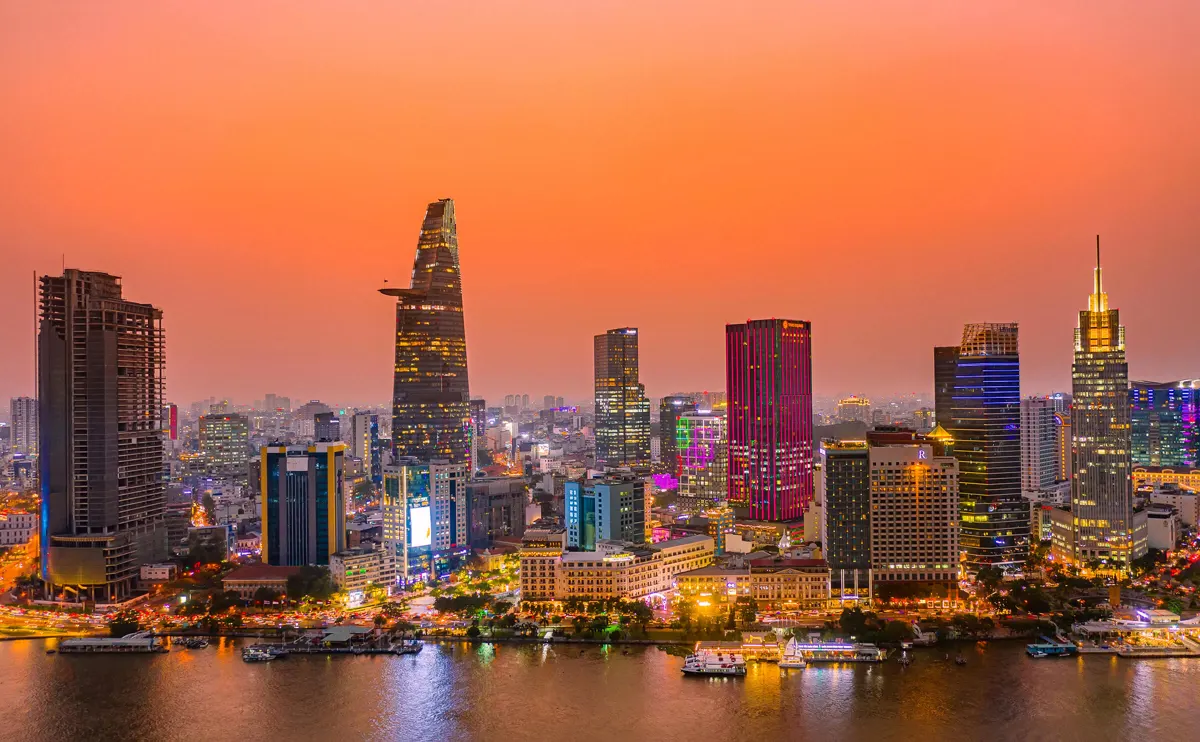
Ho Chi Minh City, a major urban center in Vietnam, features a collection of churches that stand as testaments to the country's religious and architectural history. These structures, ranging from grand cathedrals to more modest parish churches, offer visitors insights into the development of Christianity in the region and display a variety of design influences.
Exploring these sites provides an opportunity to appreciate their historical significance, unique architectural styles, and their ongoing role within local communities. Many of these churches were constructed during periods of significant foreign influence, contributing to their distinct appearances.
The Historical Footprint of Christianity in Vietnam
The introduction of Christianity to Vietnam by Western missionaries began in 1533. However, its widespread adoption and the subsequent construction of numerous churches largely coincided with the period when the Hue court accepted French protection. This historical context led to a proliferation of Christian places of worship, particularly in urban centers like Ho Chi Minh City.
Today, Ho Chi Minh City hosts over 300 churches, with more than 200 of these being Catholic. Each building possesses individual architectural characteristics and distinct historical narratives, reflecting different eras of construction and cultural interactions.
Notable Ecclesiastical Sites in Ho Chi Minh City
Ho Chi Minh City's religious landscape includes several churches that are particularly noteworthy for their architecture, history, and community presence. These sites attract both worshippers and visitors keen to observe their unique features.
Here is a selection of prominent churches to consider visiting:
- Notre Dame Cathedral
Location: 1 Cong Xa Paris, District 1
Opening hours: 5:30-17:00 (Monday to Saturday); 5:30, 6:30, 7:30, 9:30, 16:00, 17:15, 18:30 (Sunday)
Designed by French engineer J. Bourar and completed in 1880, this cathedral is among Vietnam's earliest churches. Its construction materials, including bricks and stones, were sourced from France. The design blends Roman and Gothic architectural elements, and it houses the largest pair of bells in Vietnam. As the largest church in Ho Chi Minh City, it can accommodate 1,200 people and serves as a significant religious and tourist destination. - Pink Church (Tan Dinh Church)
Location: 289 Hai Ba Trung, District 3
Opening hours: 05:00 – 17:30 (Daily)
Recognized as the second-largest church in Ho Chi Minh City after Notre Dame Cathedral, Tan Dinh Church is distinctive for its pink exterior. Built in 1870 and finished in 1876, it exemplifies French Gothic architecture, incorporating Roman and Baroque decorative styles. The entrance features two bell towers equipped with six bells. Inside, Italian marble altars were donated by a prominent local family. Beyond its visual appeal, the church is also involved in charitable activities. - Huyen Si Church
Location: 1 Ton That Tung Street, Pham Ngu Lao Ward, District 1
Opening hours: 5.30 – 17:30 (Monday to Saturday); 5:00, 6:30, 8:00, 16:30, 18:00, 19:30
This church was constructed with significant financial contributions from Huyen Sy, a wealthy Saigon resident who dedicated a portion of his land and assets to its establishment. Surrounded by mature trees, it offers a serene escape. A large statue of St. Matthew Le Van Gam, a figure executed for opposing the Nguyen Dynasty, stands before the church. Visitors often note the 57-meter-high main bell tower, topped with a cross and a Gaulois statue. - Ky Dong Church
Location: 38 Ky Dong, Ward 9, District 3, Ho Chi Minh City
Opening hours: 5:00, 6:00, 18:00 (Mon to Fri); 5:00, 6:00, 14:00, 16:00, 17:00, 18:30 (Sat); 5:00, 6:30, 8:00, 10:00, 15:30, 17:00, 18:30, 20:00 (Sun)
Ky Dong Church is known for its design featuring triangular blocks and semi-circular door arches, and particularly for its statue of Our Lady of Perpetual Help. Its architecture combines modern and traditional Roman styles, maintaining a dignified presence. Adjacent to the church is Nha Sach Duc Me, a bookstore offering a variety of Catholic literature, statues, and religious items. - Saint Joseph Seminary of Saigon's Chapel
Location: 6 Ton Duc Thang Street, Ben Nghe Ward, District 1, Ho Chi Minh City
Opening hours: Not supplied
Dating back to 1863, this seminary chapel represents one of the earliest French architectural endeavors in Ho Chi Minh City, with much of its original structure preserved for over 150 years. Established by Priest Wibaux and the Paris Foreign Missions Society, the seminary grounds are extensive. They include facilities for priestly studies and the chapel itself, along with a spacious courtyard adorned with ancient trees, stone carvings, statues, busts, and a fountain, providing a tranquil environment. - Cho Quan Church
Location: 120 Tran Binh Trong, Ward 2, District 5, Ho Chi Minh City
Opening hours: 05.00 – 11.00 and 13.00 – 21.00 daily
Established in 1722, Cho Quan Church holds the distinction of being the oldest church in Ho Chi Minh City. Although it has undergone multiple reconstructions, the current edifice was inaugurated in 1896. Its architecture is a blend of Gothic and Roman styles. This parish has endured historical challenges and continues to serve its community, adapting to contemporary changes within the Church and the nation. - Jeane d'Arc Church
Location: 116A Hung Vuong Street, Ward 9, District 5
Opening hours: 05:00 - 17:00 (Mon – Sat); 05:00 - 7:00 - 09:00 - 16:00 -18:00 (Sun)
Also known as Nga Sau Church due to its proximity to a six-street roundabout, Jeane d'Arc Church was constructed between 1922 and 1928 by Father Juan Bautista Huynh Tinh Huong. It features European Gothic architecture and is set within a large park. Historically, the site was a graveyard, but it is now characterized by bright decorations and green trees. A unique aspect of this church is its dedication to a Christian female saint. - Cha Tam Church
Location: 25 Hoc Lac, Ward 14, District 5
Opening hours: 7:00-12:00, 14:00-18:00
Officially named the Church of St. Francisco Javier, this building was completed in 1902 after construction began in the late 19th century. Cha Tam Church is notable for its interior decorations, which reportedly resemble those found in Chinese pagodas and temples, a rare sight among churches in Ho Chi Minh City. It harmoniously combines Gothic (Western) and Chinese (Eastern) architectural elements, offering a space for both religious observance and quiet contemplation. - Hanh Thong Tay Church
Location: No.7B, Quang Trung Street, Ward 11, Go Vap District
Opening hours: 4:45, 17:30 (Mon-Sat); 5:00, 7:30, 9:30, 16:00, 17:30, 19:00.
Also known as Saint Joseph Church, this structure was built from 1921 to 1924 with the patronage of wealthy landowner Denis Le Phat An and his wife, Anna Tran Thi Tho, who covered most of the construction expenses. Designed by contractors Baader and Lamorte, its Byzantine architectural style, inspired by the Vitale Basilica in Ravenna, Italy, is considered distinctive within Saigon and Vietnam, differing from the more prevalent Gothic and Roman designs. - Chi Hoa Church
Location: 149 Banh Van Tran Street, Ward 7, Tan Binh District
Opening hours: Not supplied
Officially named Our Lady of the Rosary Church, Chi Hoa Church was built with the approval of Father Mossad in 1890 and inaugurated on October 7, 1890. The entire 600-acre foundation area was a donation from Huyen Sy Le Phat Dat, a prominent landowner in South Vietnam at the time. The church complex comprises three main sections: the church gate, La Vang Mother Square, and the main temple. Visitors report that the Divine Mercy Mass held here is believed to offer acceptance to all who pray.
Architectural Styles and Cultural Significance
The churches of Ho Chi Minh City present a diverse array of architectural styles, reflecting the various influences that shaped their construction. Visitors can observe prominent European styles such as Gothic, Roman, and Baroque, often combined in unique ways. For instance, Notre Dame Cathedral showcases a blend of Roman and Gothic features, while Tan Dinh Church integrates Gothic with Roman and Baroque decorative elements.
A particularly distinctive example is Hanh Thong Tay Church, which stands out with its Byzantine style, a rarity in the region. Furthermore, Cha Tam Church offers a fascinating fusion of Western Gothic and Eastern Chinese architectural elements, making it a unique cultural landmark. These architectural variations not only contribute to the visual appeal of the city but also narrate stories of historical periods, foreign interactions, and local adaptations in design.
Planning Your Visit to Ho Chi Minh City's Churches
When planning to visit these religious sites, it is advisable to check current opening hours, as these can be subject to change. Many churches, while open to tourists, are active places of worship, and visitors are encouraged to dress respectfully and maintain quiet, especially during services. Photography may be restricted in certain areas or during specific times.
Consider visiting during weekdays for a potentially less crowded experience, though Sunday services offer a chance to observe local religious practices. Exploring the areas around these churches can also reveal local markets, eateries, and other points of interest. For those managing their finances while exploring the city, information on banking services in Ho Chi Minh City for travelers is readily available.
Cultural Impact and Modern Role
Beyond their architectural grandeur, these churches play a significant role in the cultural and social fabric of Ho Chi Minh City. They serve as centers for religious observance, community gatherings, and charitable initiatives. Many also function as educational sites, preserving historical records and cultural traditions.
For residents, these churches are integral to their spiritual lives and community identity. For visitors, they offer a window into a different facet of Vietnamese culture, providing spaces for reflection and appreciation of historical artistry. The continued preservation and active use of these buildings underscore their enduring importance in a rapidly evolving urban landscape.
Comparison of Prominent Ho Chi Minh City Churches
| Church Name | District | Primary Architectural Style | Key Feature |
|---|---|---|---|
| Notre Dame Cathedral | District 1 | Roman & Gothic | Largest church, biggest bells in Vietnam |
| Pink Church (Tan Dinh Church) | District 3 | French Gothic (Roman/Baroque elements) | Distinctive pink exterior |
| Huyen Si Church | District 1 | Not specified (traditional) | 57-meter bell tower, St. Matthew statue |
| Ky Dong Church | District 3 | Modern & Traditional Roman | Triangle blocks, Our Lady of Perpetual Help statue |
| Saint Joseph Seminary of Saigon's Chapel | District 1 | French | One of the first French architectural works |
| Cho Quan Church | District 5 | Gothic & Roman | Oldest church in Ho Chi Minh City (est. 1722) |
| Jeane d'Arc Church | District 5 | Gothic | Near a six-street roundabout, dedicated to female saint |
| Cha Tam Church | District 5 | Gothic & Chinese | Unique blend of Western and Eastern architecture |
| Hanh Thong Tay Church | Go Vap District | Byzantine | Rare style, modeled after Vitale Basilica |
| Chi Hoa Church | Tan Binh District | Roman | 600-acre foundation donated by Huyen Sy Le Phat Dat |
Frequently Asked Questions
What is the oldest church in Ho Chi Minh City?
Cho Quan Church, established in 1722, holds the distinction of being the oldest church in Ho Chi Minh City. While it has been rebuilt multiple times, its origins trace back to the early 18th century.
Which church in Ho Chi Minh City is known for its pink color?
Tan Dinh Church, often referred to as the Pink Church, is widely recognized for its distinctive pink exterior. This vibrant color makes it one of the most visually striking religious buildings in the city.
What architectural styles are common among Ho Chi Minh City churches?
The churches in Ho Chi Minh City display a range of architectural styles, predominantly including Gothic, Roman, and Baroque influences, often combined. Some churches, like Hanh Thong Tay, feature rarer styles such as Byzantine, while Cha Tam Church uniquely blends Gothic with Chinese elements.
Can tourists enter these churches?
Most churches in Ho Chi Minh City welcome tourists to visit and admire their architecture. However, visitors should be mindful that these are active places of worship. It is generally advised to dress modestly, maintain quiet, and avoid visiting during ongoing services to show respect.
What is the significance of Notre Dame Cathedral in Ho Chi Minh City?
Notre Dame Cathedral is significant as one of Vietnam's earliest churches, designed by a French engineer and completed in 1880. It is the largest church in Ho Chi Minh City, capable of seating 1,200 people, and features a combination of Roman and Gothic architecture along with the country's largest pair of bells, making it a prominent historical and religious landmark.








