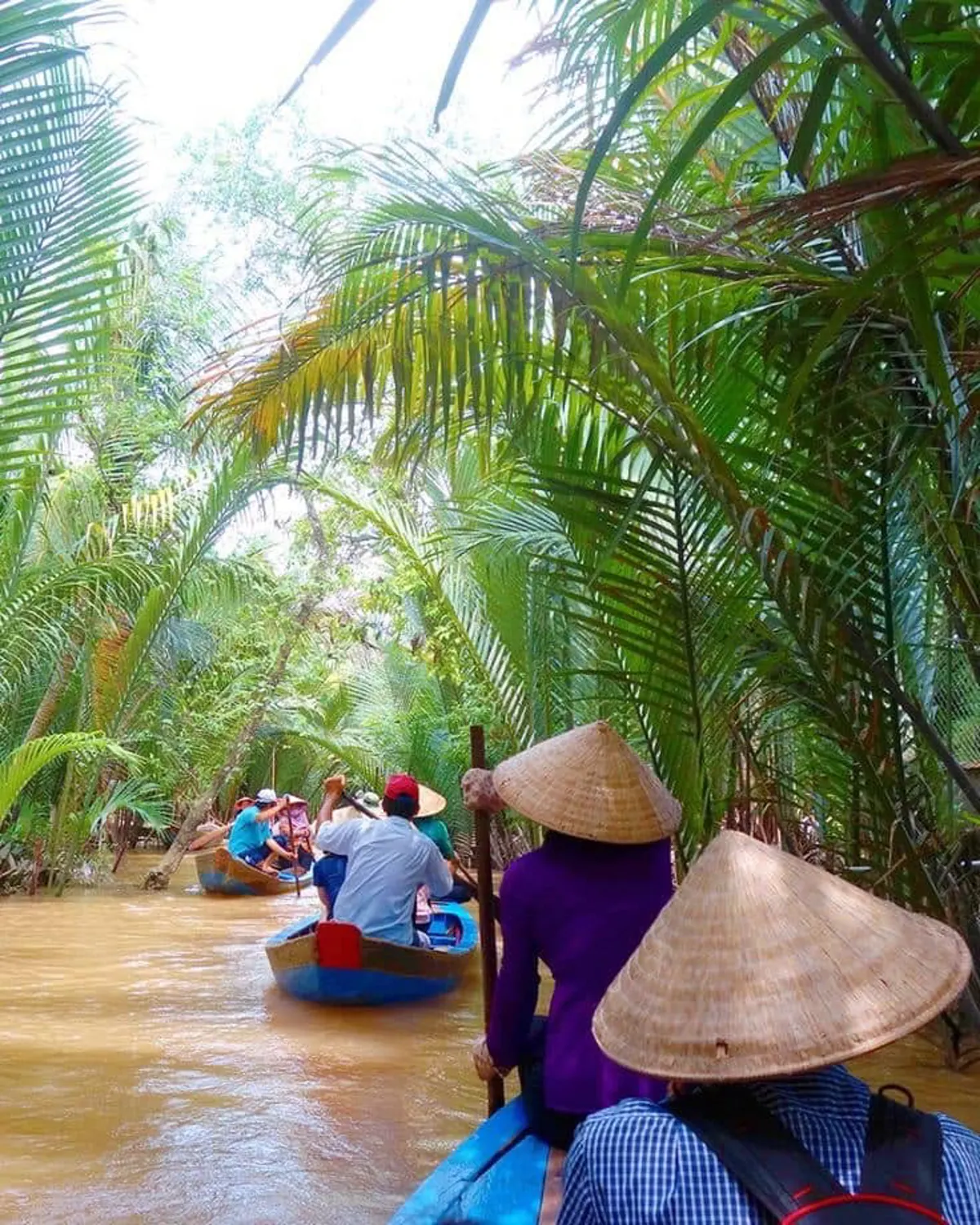
A two-week period provides ample opportunity to experience Vietnam's primary attractions, spanning its northern, central, and southern regions. This suggested itinerary is designed for those visiting for the first time, offering a balanced exploration of cultural landmarks, natural landscapes, and local culinary traditions across the country.
Planning a Two-Week Vietnam Exploration
Vietnam offers a rich array of experiences, from the energetic pace of its major cities to the serene beauty of its natural environments. A 14-day trip allows visitors to appreciate the distinct character of each region. The southern part of the country is known for its modern urban centers and agricultural waterways, while the central region features ancient towns and imperial history. The north presents the nation's capital and iconic limestone formations.
This itinerary is structured to guide travelers through these varied settings, highlighting key points of interest and offering practical advice for navigating between locations. It aims to provide a clear framework for planning, ensuring a rewarding and well-rounded visit.
A Detailed 14-Day Journey Through Vietnam
This section outlines a possible day-by-day progression for a two-week visit, covering significant locations and activities from south to north.
Southern Vietnam: Ho Chi Minh City and Mekong Delta (Days 1-4)
Your journey begins in Ho Chi Minh City, formerly known as Saigon, the economic hub of Vietnam. This metropolis combines contemporary energy with historical architecture. Begin your exploration at the Notre Dame Cathedral, a notable example of French colonial design. Nearby, the Central Post Office showcases similar architectural influences, offering a chance to observe its intricate structure.
Continue to the Independence Palace, a site that played a crucial role in the conclusion of the Vietnam War. For deeper historical context, the War Remnants Museum provides exhibits reflecting the conflict's impact. These sites are generally accessible on foot. In the evening, options for experiencing the city's atmosphere include Bui Vien Street, known for its lively ambiance, or Nguyen Hue Walking Street, a pedestrian area offering a more relaxed setting. Culinary recommendations for Ho Chi Minh City include Nam Vang noodle soup, broken rice (Com Tam), and the sweet treat Che. Consider a sunset cruise on the Saigon River for another perspective of the city.
Following your time in Ho Chi Minh City, travel to the Mekong Delta, specifically Cai Be province, for an authentic regional experience. Upon arrival, visitors often receive fresh fruit. Explore the Cai Be floating market, a significant trading point for rice in the Southwest. Afterwards, proceed to Tan Phong Island for an overnight stay. Activities on the island may include visiting a bee farm to learn about beekeeping and taste honey tea, or navigating a monkey bridge. Fruit orchards offer opportunities to sample tropical fruits and witness a performance of "Don Ca Tai Tu," a traditional Vietnamese folk music genre.
The next morning on Tan Phong Island, observe the daily routines of local farmers. A bicycle tour around the island can include visits to traditional handicraft workshops, such as a rice paper workshop, and cooking classes, where participants can learn to prepare dishes like jackfruit leaf cake or weave banana string hammocks. A recommended dish in the Mekong Delta is Deep Fried Elephant Ear Fish (Ca Tai Tuong Chien Xu).
Central Vietnam: Hoi An, Cam Thanh, Hue, and Quang Binh (Days 5-9)
From Ho Chi Minh City, a flight of approximately 1 hour and 15 minutes transports you to Hoi An, a riverside town recognized for its historical significance as an international port between the 16th and 18th centuries. A half-day walking tour is suggested to explore its heritage. Start at the Assembly Hall of Fujian, a Chinese temple complex. The Japanese Pagoda Bridge offers views of the Thu Bon River. Visit the Old House of Tan Ky, an 18th-century residence showcasing traditional architecture. Conclude your walk at Precious Heritage by Réhann, a cultural center featuring workshops and exhibitions.
Entry to Hoi An Ancient Town itself is free, but visiting specific attractions typically costs VND 120,000 (approximately US $4.8) per person. Bicycle rentals are available for around US $6.95 per day for independent exploration. Hoi An is known for dishes such as Cao Lau, Mi Quang, Banh Mi, Banh Khot, Banh Xeo, and Banh Beo. Additional activities include the Hoi An Memories Show or a half-day cooking class focused on Vietnamese cuisine.
On Day 6, take a taxi to Cam Thanh Village, located 5 km from Hoi An Ancient Town. Begin with a bicycle ride through the countryside. In the village, visitors can participate in traditional farming activities with locals, such as tilling soil, planting rice, and watering vegetable gardens. This hands-on experience often concludes with a meal prepared from freshly harvested produce.
Days 7 and 8 are dedicated to Hue City. Travel options from Hoi An include a three-hour shuttle bus or a three-hour train journey from nearby Da Nang. A boat trip along the Perfume River offers views of the area. Visit Thien Mu Pagoda, a prominent symbol of Hue. Explore the Imperial Citadel, a UNESCO World Heritage Site, which once served as the residence of the Nguyen Emperors. Dong Ba Market, the largest market in Hue, provides a sensory experience with a variety of goods from traditional crafts to street food. Local specialties to try include Bun Bo Hue (spicy beef noodle soup) and Banh Beo (savory steamed rice cakes). Other Hue dishes include Bun Hen, Nem Lui, and Che Hue. For managing finances while traveling in Hue City, numerous banking institutions are available.
Day 9 focuses on the Demilitarised Zone (DMZ) and Phong Nha Cave. Visit the DMZ along the Ben Hai River in Quang Tri province, which historically divided North and South Vietnam. Cross the Hien Luong Bridge to understand the region's wartime significance. In the afternoon, proceed to Phong Nha Cave in Quang Binh province, a natural formation featuring majestic stalactites and stalagmites within its chambers and passages.
Northern Vietnam: Hanoi and Halong Bay (Days 10-14)
Your journey continues to Hanoi, the capital of Vietnam. Transportation from Quang Binh province includes a direct flight from Dong Hoi to Hanoi (approximately one hour), an overnight bus (8-9 hours), or a train (12-13 hours). For those interested in overnight train journeys across Vietnam, this option provides a different travel perspective.
In Hanoi, begin by visiting the Ho Chi Minh Mausoleum, a tribute to Vietnam's revered leader. Nearby, the One Pillar Pagoda exhibits distinctive architecture. The Temple of Literature, Vietnam's first university, offers insight into the country's educational history. A half-day city tour is often recommended for efficient exploration with local guidance. Other notable sites include Hoa Lo Prison, built by the French in 1896, which now functions as a museum reflecting Vietnam’s fight for independence. Hoan Kiem Lake is a central landmark surrounded by Dinh Tien Hoang, Hang Khay, and Le Thai To streets. St. Joseph's Cathedral, located at 40 Nha Chung Street, Hoan Kiem District, Hanoi, is a Gothic Revival-style structure serving the Catholic community. It is open from 8:00 am to 11:00 am and 2:00 pm to 5:00 pm, with free entry. Hanoi's culinary scene includes Pho for breakfast, Cha Ca La Vong for lunch, Trang Tien ice cream, and egg coffee from Giang Cafe.
The final days (12-14) are dedicated to an overnight cruise in Halong Bay. Transfers from Hanoi to Tuan Chau Harbor typically take 2.5 hours. Upon boarding your chosen cruise, you will explore caves such as Sung Sot Cave, Thien Canh Son Cave, or Trung Trang Cave, admiring their stalactite and stalagmite formations. Multi-day cruises often include additional activities like kayaking through the bay's waters or visiting traditional fishing villages such as Viet Hai Village. For those seeking relaxation, Halong Bay offers various beaches to explore.
| Cruise Name | Price From (USD/pax) | Star Rating |
|---|---|---|
| Orchid Cruise | $315 | 5 |
| Peony Cruise | $255 | 4.5 |
| Grand Pioneers (Essence Grand) Cruise | $453 | 5 |
| Capella Cruise | $393 | 5 |
| Mon Cheri Cruise | $301 | 5 |
| Scarlet Pearl Cruise | $316 | 5 |
Culinary Highlights Across Vietnam
Vietnamese cuisine is celebrated for its diverse flavors and textures, with street food being a particular draw. Each region presents its own culinary specialties. Below are some recommended dishes and places to try them:
- Ho Chi Minh City:
- Com Tam: A broken rice dish with grilled pork, fried eggs, and pickled vegetables. Try it at Com Tam Phuc Loc Tho (236 Dinh Tien Hoang) or Com Tam Ba Ghien (84 Dang Van Ngu).
- Pha Lau: A hearty noodle soup with offal, pork belly, and a rich broth. Recommended at Pha Lau Luat (1A Suong Nguyet Anh) and Pha Lau-Gia Dinh High School (195/29 Xo Viet Nghe Tinh).
- Mekong Delta:
- Bun Mam: A fermented fish noodle soup with bold flavors. Popular at Bun Mam Di Ba (No. 58, Mac Thien Tich, Ninh Kieu) and Bun Mam De Tham (No. 12, De Tham, An Cu).
- Hu Tieu My Tho: A noodle soup originating from My Tho, known for its broth and various toppings. Locals favor Hu Tieu Chu 5 Hoa (No. 207, Trung Trac Street, Ward 1) and Hu Tieu Sau Sen (No. 108, Tran Hung Dao, Ward 6).
- Hoi An:
- Banh Xeo: A crispy crepe filled with pork, shrimp, and bean sprouts. A classic version can be found at Banh Xeo Co Anh (59/32, 18/8 Street, Minh An Ward).
- Mi Quang: A noodle soup with a tangy broth, turmeric-infused noodles, and toppings like pork, shrimp, and herbs. Quang Hat Noodles (81 Phan Chau Trinh Street, Minh An Ward) is a recommended spot.
- Com Ga: Steamed chicken with fluffy rice, pickled vegetables, and a savory dipping sauce. Com Ga Ba Buoi on Phan Chau Trinh Street is a local preference.
- Hue:
- Bun Bo Hue: A spicy beef noodle soup with a flavorful broth. Try it at Me Beo (No. 20, Bach Dang Street) and Ba Tuyet (No. 47, Nguyen Cong Tru Street).
- Banh Khot: Savory pancakes made with rice flour and coconut milk, served with shrimp and herbs. Me Le (No. 104/17/9, Kim Long Street) and Banh Khot Bui Thi Xuan on Bui Thi Xuan Street are well-regarded.
- Banh Ep: A crispy pancake filled with tapioca flour, pork, and herbs. Chi Hue (No. 116, Le Ngo Cat Street) and Gia Di (No. 52, Ba Trieu Street) are good places to sample this.
- Quang Binh Province:
- Lau Ca Khoai: A hot pot dish featuring freshwater fish and taro root. Available at Khoai Anh Dao (250 Phan Boi Chau, Dong Hoi City) and Khoai Binh An (58 Nguyen Du, Dong Hoi City).
- Banh Khoai: A pancake made with rice flour and turmeric, filled with shrimp and pork. Co Nam Restaurant (13 Tran Hung Dao Street) and Ly Ly Restaurant (11A Co Tam Street) are good choices.
- Hanoi:
- Pho: Vietnam's renowned noodle soup with broth, rice noodles, and slices of beef or chicken. Pho Bat Dan (49 Bat Dan, Hoan Kiem District) and Pho Ly Quoc Su (18 Le Truc, Ba Dinh District) are iconic locations.
- Bun Cha: Grilled pork, rice noodles, and a sweet and sour dipping sauce. Popular at Bun cha Huong Lien (No. 24, Le Van Huu Street, Hai Ba Trung District) and Bun cha Dac Kim (No. 1, Hang Manh Street, Hoan Kiem District).
- Halong Bay:
- Cha Muc: Grilled chopped squid, often enjoyed with a cold beverage. Goc Bang Roll and Grilled Chopped Squid Restaurant in Opera House Lane is a suggested place.
- Bun Be Be: A soup featuring mantis shrimp, a prized local seafood. Lang Chai Noodle with Mantis Shrimp (1 Le Thanh Ton Street, Hong Gia) is recommended for seafood enthusiasts.
Essential Travel Information for Vietnam
Planning a trip to Vietnam involves considering various practical aspects, from budgeting to transportation and entry requirements. This section provides key details to help prepare for your visit.
Budgeting for a Two-Week Trip
Vietnam is generally considered an affordable travel destination. Estimated costs can vary based on travel style and the season. Below is a general estimate:
| Item | Estimated Cost (USD) |
|---|---|
| Flights (roundtrip) | $300 - $1000 |
| Accommodation | $10 - $50/night |
| Food | $10 - $25/day |
| Transportation | $5 - $20/day |
| Activities | $10 - $50/day |
| Other expenses | $50 - $100 |
| Total | $1,500 - $4,000 |
Money Management Tips
Effective money management is beneficial for a budget-friendly trip to Vietnam. The local currency is the Vietnamese Dong (VND), with an approximate exchange rate of VND 24,000 to US $1. It is advisable to exchange currency at reputable banks, airports, or authorized exchange services. While credit and debit cards are accepted in urban and tourist areas, carrying some cash is useful, especially for smaller establishments or rural locations. Bargaining is a common practice in local markets; a friendly approach and basic Vietnamese phrases can be helpful. For security, consider using a money belt or hidden pocket, particularly in crowded areas or during overnight travel. Tipping is not mandatory but is always appreciated.
Transportation Within Vietnam
Vietnam is accessible via several international airports: Noi Bai International Airport (Hanoi), Tan Son Nhat International Airport (Ho Chi Minh City), and Da Nang International Airport. Major airlines, including Vietnam Airlines, Vietjet Air, and Pacific Airlines, serve these locations.
Once in the country, various transportation options are available:
- Domestic flights: For quick travel between major cities, domestic airlines like Vietnam Airlines, Vietjet Air, and Bamboo Airways offer numerous routes.
- Trains: The railway network connects many provinces and cities, offering a scenic way to travel. Options include unified and high-speed trains.
- Buses: A common and economical choice for intercity travel, with tickets available at bus stations or online.
- Motorbikes: Renting a motorbike allows for exploration of rural areas, though adherence to local traffic regulations is important.
- Motorbike taxis (Grab): Widely available in larger cities for short distances or navigating narrow streets.
Visa Requirements
Travelers from countries with visa waiver agreements can enter Vietnam without a visa for stays of 15, 30, or up to 90 days. For those not eligible for a waiver, Vietnam offers a convenient e-visa option. The online application requires a valid passport, a digital photo of the passport's data pages, a passport photo, and a fee of US $25. The process typically takes a few days to complete.
Accommodation Suggestions
For a comfortable stay during your 14-day trip, consider these hotel recommendations in popular destinations:
- Hanoi: For proximity to main attractions, Hoan Kiem, Ba Dinh, or Tay Ho districts are recommended. Options include Hanoi Paradise Center Hotel & Spa and Hanoi Center Silk Lullaby Hotel and Travel.
- Hue, Hoi An, and Da Nang: In Hue, the Eldora Hue offers a luxurious experience. For Da Nang, Greenery Da Nang provides a modern choice. In Hoi An, La Siesta Hoi An Resort & Spa is suggested for a peaceful stay.
- Ho Chi Minh City: Districts 1 or 3 are suitable for a city experience. The Valentine Luxury Hotel offers stylish accommodations, while TN Central Hotel provides a more budget-friendly alternative.
When booking, consider location relative to attractions, available amenities (restaurant, pool, gym), and online reviews. Reputable booking platforms such as Agoda, Booking.com, or Hotels.com are advised.
Packing Advice
Packing effectively for a two-week trip to Vietnam can enhance your experience:
- Appropriate attire: Vietnam is culturally rich; cover shoulders and knees when visiting religious sites.
- Sun protection: The sun can be intense; pack sunscreen and a hat.
- Rain gear: Bring a raincoat, especially if traveling during the rainy season (June to August for Northern Vietnam, October to December for Central Vietnam, May to October for Southern Vietnam).
- Navigation tools: Google Maps can be helpful for navigating cities and locating points of interest.
- Local guide: Hiring a local guide can introduce you to authentic experiences and places you might otherwise miss.
- Souvenirs: For those interested in unique purchases and souvenirs, local markets offer a diverse array of traditional crafts.
Frequently Asked Questions
Can Two Weeks in Vietnam Be Enough?
Two weeks is generally considered a good duration to explore key regions of Vietnam. This timeframe allows visitors to experience major cities, diverse natural settings, and the country's varied cultural heritage without feeling overly rushed.
When is the rainy season in Vietnam?
Vietnam's climate varies by region. The rainy season typically occurs from June to August in Northern Vietnam, October to December in Central Vietnam, and May to October in Southern Vietnam.
Is starting in Hanoi or Ho Chi Minh City better for a Vietnam itinerary of 2 weeks?
Both Hanoi and Ho Chi Minh City serve as excellent starting points for a Vietnam trip, each offering distinct atmospheres. Hanoi presents a more traditional and historical environment, while Ho Chi Minh City is characterized by its modern and energetic pace. The optimal starting city depends on individual preferences and the specific flow of your planned itinerary.