
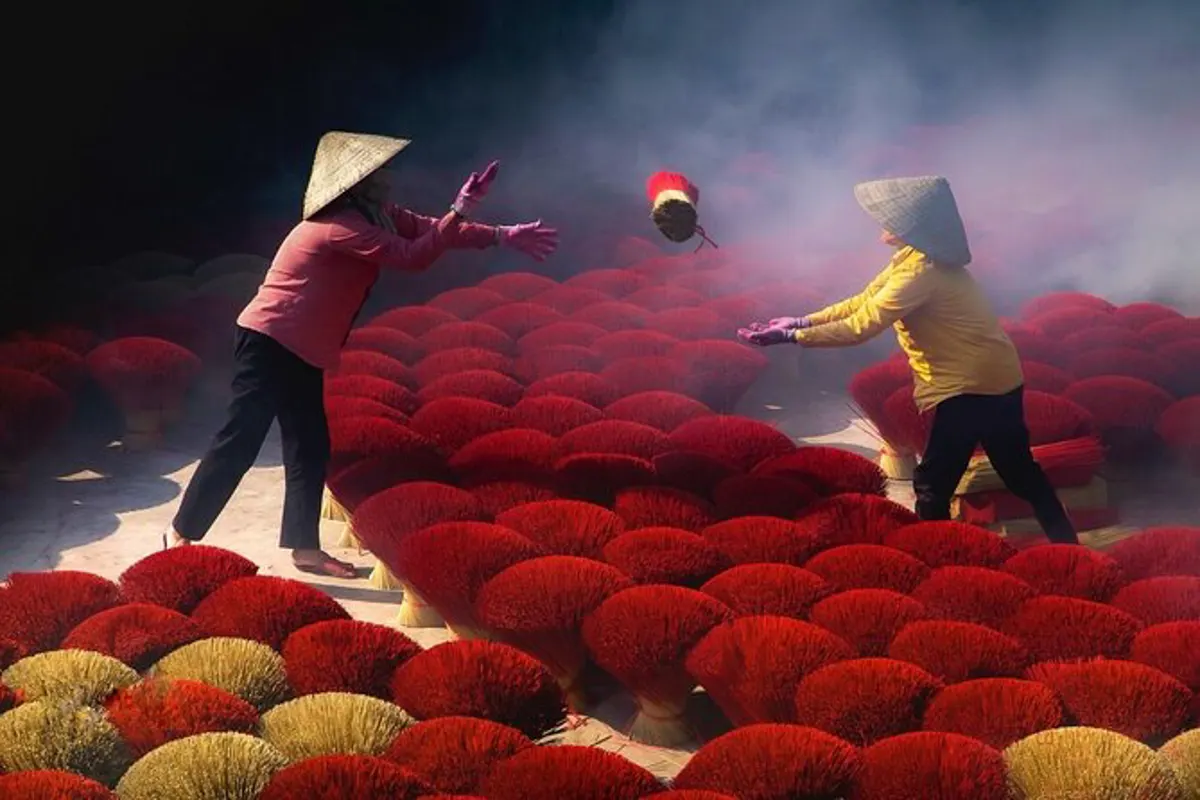
Van Phuc Silk Village, located approximately 10 kilometers southwest of Hanoi's historic Old Quarter, represents a significant cultural site and a renowned center for traditional Vietnamese silk production. This long-established craft village provides a window into ancient weaving techniques and offers visitors the chance to acquire authentic, high-quality silk products directly from their origin. It stands as a testament to Vietnam's rich textile heritage.
The Enduring Legacy of Van Phuc Silk
The art of silk weaving in Van Phuc traces its origins to the 9th century, with early historical accounts suggesting that a local individual pioneered the fundamental weaving methods. The craft experienced substantial growth and refinement by the 16th century, evolving into an industry celebrated for its sophisticated products adorned with intricate and detailed designs. For a period, this village held the esteemed position of being the primary supplier for royal garments, responsible for creating the elaborate attire worn by the Nguyen Dynasty in Hue. This connection underscores the historical importance and quality associated with Van Phuc silk.
Van Phuc silk achieved international recognition between 1931 and 1932, when its exquisite textiles were presented at major exhibitions in Marseille and Paris during the French colonial era. This global exposure generated considerable interest among European consumers, particularly in France. Following this, from 1958 to 1988, the village's silk products were predominantly exported to markets across Eastern Europe. By 1990, Van Phuc silk had firmly established its reputation and popularity on a worldwide scale, becoming a symbol of Vietnamese craftsmanship. The village's ability to adapt and thrive through centuries, from royal patronage to international trade, highlights its resilience and the enduring appeal of its products.
Characteristics of Van Phuc Silk Products
The continuity of silk weaving skills across generations in Van Phuc is a direct result of deeply rooted traditions and the dedicated efforts of local residents to preserve their heritage. This commitment has fostered a distinct cultural identity, visibly expressed in the textiles that have historically shaped Vietnamese clothing. Each piece of silk is meticulously crafted, with artisans pouring their skill and passion into creating elaborate and refined patterns. The production process largely relies on time-honored techniques, many of which are considered unique to the weavers of Van Phuc. Strict regulations govern every stage of production, ensuring consistency and quality.
Van Phuc silk is widely acknowledged for its smooth texture, inherent softness, and elegant drape. A particularly notable traditional variety is "Van Silk," distinguished by its unique thermoregulating properties; wearers often report feeling cool in warm weather and comfortably warm when temperatures drop. In response to the diverse and evolving demands of the modern market, Van Phuc craftspeople have expanded their product lines. Today, their offerings include a broader array of textiles such as embroidered silk, wrinkled silk, and double-layered fabrics, available in an extensive palette of colors, catering to both traditional and contemporary tastes.
Exploring the Village: What to See and Do
A visit to Van Phuc Silk Village offers more than just shopping; it provides a comprehensive experience of a living craft tradition. Many local families operate their own retail outlets, creating a concentrated "town of silk" where visitors can browse and purchase a wide selection of high-quality items. Shoppers have the option to buy ready-made garments and accessories or choose specific fabrics for custom tailoring. Most vendors are welcoming and often possess basic proficiency in English and French, facilitating communication with international guests.
The array of silk products available is extensive, encompassing various clothing items, scarves, ties, and accessories like handbags and purses. Pricing is generally considered reasonable, with the average cost for a meter of silk typically around 10 USD, though this can vary based on the material and intricacy. For some items, polite bargaining may be an option. Beyond the commercial areas, visitors can explore significant cultural sites within the village, including Van Phuc Pagoda, a place of spiritual importance, and the Natural Silk Protected Area, which offers insights into the raw materials and traditional processes. A highlight for many is the opportunity to observe traditional looms in operation, providing a tangible connection to the manual labor involved in silk production, even with the introduction of some modern technological elements. Additionally, the village features a visually appealing 100-meter street decorated with a canopy of colorful umbrellas, presenting a delightful setting for photographs and a leisurely stroll. For those interested in unique purchases and souvenirs, Van Phuc offers a rich selection of handcrafted items.
Planning Your Visit to Van Phuc Silk Village
Van Phuc Silk Village is conveniently located approximately 10 kilometers southwest of Hanoi's Old Quarter, making it an accessible destination for a half-day trip.
Transportation Options:
- Motorbike Rental: Renting a motorbike provides flexibility and is a common way for independent travelers to reach the village.
- Taxi or Ride-Sharing: Taxis or app-based ride services offer a comfortable and direct route from central Hanoi.
- Public Bus: Local bus routes 02 or 21 serve the area. After disembarking, visitors will need to walk approximately 500 meters to reach the village entrance.
- Driving Directions: To navigate by private vehicle or motorbike, proceed southwest from central Hanoi along Nguyen Trai Road. Upon reaching the border of Ha Dong District, turn right and continue for roughly 3 kilometers until the village is reached.
Essential Visitor Information:
- Location: Van Phuc Village, Ha Dong District, Hanoi
- Operating Hours (Please verify locally for current information): Daily, 08:00 – 22:00
While a visit to Van Phuc can be a rewarding standalone excursion, it can also be integrated into a broader itinerary. Travelers with more time or a particular interest in traditional crafts might consider combining it with trips to other nearby cultural sites such as Duong Lam Ancient Village or the Perfume Pagoda. When planning any trip around Hanoi, understanding banking services in Hanoi can also be a practical consideration for managing finances.
Frequently Asked Questions
What is the primary appeal of Van Phuc Silk Village?
Van Phuc Silk Village is primarily appealing for its deep-rooted history in traditional Vietnamese silk weaving, offering visitors a chance to observe ancient craft techniques and purchase authentic, high-quality silk products directly from the artisans. It's a key destination for cultural immersion and souvenir shopping.
How far is Van Phuc Silk Village from Hanoi's city center?
The village is situated approximately 10 kilometers southwest of Hanoi's Old Quarter, making it a convenient and relatively short journey from the heart of the capital.
Can visitors observe the silk weaving process in Van Phuc?
Yes, a significant highlight of visiting Van Phuc is the opportunity to see traditional silk looms in operation. This allows guests to witness firsthand the intricate manual labor and skill involved in producing the village's renowned silk.
What types of products are available for purchase in Van Phuc Silk Village?
The village offers a diverse range of silk products, including various clothing items, scarves, ties, and accessories such as handbags and purses. Visitors can also buy raw silk fabric for custom tailoring, with options like embroidered, wrinkled, and double-layered silks in many colors.
What are the typical operating hours for shops and attractions in Van Phuc Silk Village?
Based on information available at the time of publication, the village generally operates daily from 08:00 to 22:00. However, it is always advisable to confirm specific shop hours upon arrival, as individual businesses may vary.








