
Co Loa Ancient Citadel, recognized as Vietnam's first and oldest fortified settlement, served as the capital of the Au Lac Kingdom during the 3rd century BC. This significant historical site maintained its role as a crucial political hub for the Vietnamese populace until the 10th century. Today, the remnants of Co Loa Citadel are situated across the communes of Co Loa, Duc Tu, and Viet Hung within Dong Anh District, approximately 16 kilometers northeast of Hanoi's Old Quarter and 22 kilometers south of Noi Bai International Airport, making it a popular historical destination outside the city center.
The Enduring Historical Significance of Co Loa Citadel
Co Loa's establishment as the capital of the Au Lac Kingdom in the 3rd century BC marked a pivotal moment in early Vietnamese history. Its strategic position at the apex of the Red River Delta's triangular region made it an important center for both overland and waterway trade. From this location, the ruling court could effectively oversee both highland and lowland territories. The citadel was constructed on elevated ground along the left bank of the Hoang River, an area characterized by a dense population and a flourishing economy.
The Hoang River, then a primary tributary of the Red River, connected to the Cau River, which is the largest river within the Thai Binh River system. These two river systems collectively formed the dominant waterway network in Northern Vietnam, a role they continue to hold. From Co Loa, inhabitants could navigate upstream on the Hoang River towards the northern and northwestern mountains and forests, or downstream to the plains and the sea. The relocation of the capital from the midlands (Phong Chau – Phu Tho) to the lowlands (Co Loa – Dong Anh – Hanoi), with its advantageous geography, transport links, and economic conditions, reflected the evolving development needs of the Au Lac Kingdom. Co Loa Citadel was officially designated a National Monument by the Vietnamese government in 1962 and later recognized as a Special National Monument in 2012, acknowledging its profound historical, artistic, and archaeological value.
Unique Architectural Design of the Spiral Citadel
Co Loa is renowned for its distinctive spiral architectural layout, earning it the alternative name "Spiral Citadel" (Loa Thành). Ancient Vietnamese builders skillfully leveraged the natural terrain, utilizing existing hills and mounds to form the outer defensive walls. The original Co Loa was an expansive complex, dominating the northern floodplain of the Red River Delta, and its construction would have demanded substantial labor and resources for its era.
According to traditional accounts, Co Loa Citadel originally featured nine concentric walls, encircled by deep moats designed to facilitate boat movement. These walls and ramparts were reportedly built concurrently. A primary lagoon to the east of the walls provided water via five streams for the residents within the citadel. The walls typically measured 4 to 5 meters in height, with some reaching up to 12 meters, and their bases were approximately 20 to 30 meters wide. Over centuries, natural forces and time have eroded several of these structures, leaving three main walls with a combined length of 16 kilometers. These remaining walls include the Outer Wall, spanning an 8-kilometer perimeter; the Middle Wall, which is polygonal in shape with a 6.5-kilometer perimeter; and the Central Wall, a rectangular structure enclosing a 1.6-kilometer perimeter.
A central feature within the Co Loa Citadel complex is the An Duong Vuong Temple, also known as Thuong Temple. This temple, constructed in 1687 during the reign of King Le Hi Tong, is located at the heart of the citadel. Visitors often notice the intricately carved dragon pair guarding the temple's entrance, whose lifelike details are considered emblematic of Le dynasty sculptural art. The temple grounds are said to resemble a dragon's head, with two forested areas on either side representing the dragon's body and two ponds at the entrance serving as its eyes.
Legends and Enduring Cultural Narratives
The existence of Co Loa Citadel is deeply intertwined with numerous captivating legends that form a significant part of Vietnamese national folklore. These miraculous tales recount the establishment of the kingdom under King An Duong Vuong, the construction of the citadel itself, and the story of a magical crossbow, a gift from a golden turtle, capable of defeating hundreds of invaders. Another poignant narrative involves the tragic romance between My Chau, the king's daughter, and Trong Thuy, the son of King Trieu Da, an adversary of An Duong Vuong.
Through the passage of time, the physical remnants of this ancient citadel and the legendary figures associated with it have become ingrained in the collective consciousness of the Vietnamese people. Beyond these mythical narratives, Co Loa Ancient Citadel holds considerable significance across several domains:
- Military Strategy: Co Loa Citadel exemplifies the inventive defensive strategies of ancient Vietnamese people against foreign incursions. Its fortified walls, extensive moats, and rampart systems created a robust defensive stronghold protecting the King, the Imperial Court, and the capital. It also represented an effective integration of naval and infantry forces. The three accessible loops of the citadel enabled coordinated land and water maneuvers during conflicts.
- Social Structure: The distinct residential zones allocated for the King, mandarins, and soldiers within Co Loa Citadel provide tangible evidence of social stratification during that period. Its construction marked an era when the monarch lived separately from the general populace, under strict military protection.
- Cultural Heritage: Among Vietnam's surviving ancient citadels, Co Loa stands as the oldest, boasting a history spanning 2,300 years. Following the Au Lac Kingdom, Co Loa was again chosen as the national capital under King Ngo Quyen's reign (AD 939-944). Archaeological excavations at Co Loa have unearthed valuable artifacts from ancient Vietnamese civilization, including bronze drums, coins, axes, thousands of bronze arrows, plows, and items made of ceramic and terracotta, all testifying to the advanced development of Au Lac culture under King An Duong Vuong.
The Annual Co Loa Citadel Festival
The Co Loa Citadel Festival is an annual event observed from the 6th to the 16th day of the first lunar month. This festival commemorates King An Duong Vuong's relocation of the capital from the highlands to the lowlands. Residents from 12 hamlets within Co Loa and seven neighboring communes collaboratively organize this ten-day celebration.
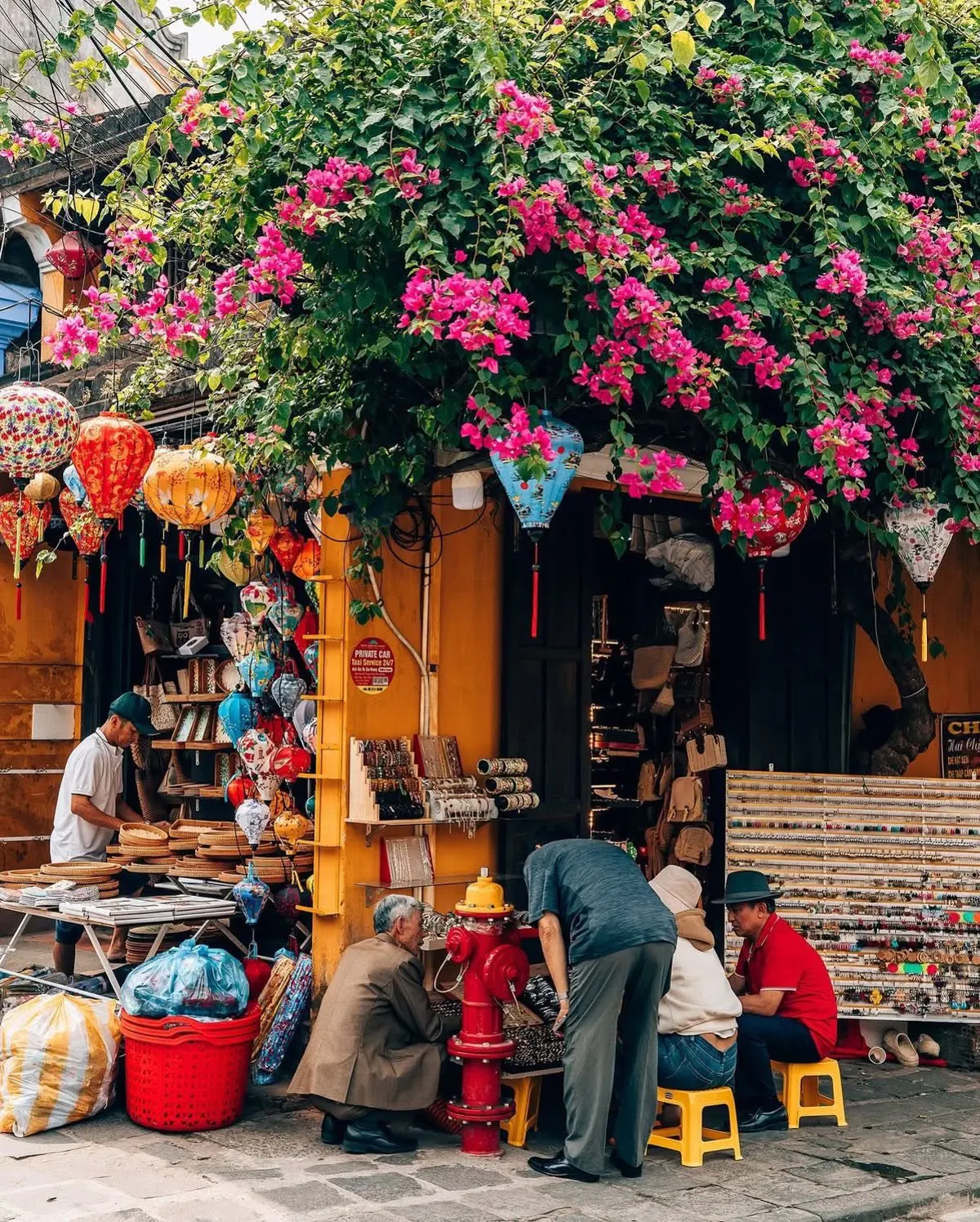
On the fifth day of the festival, eight communes conduct an incense offering ceremony at the sacred communal house. Simultaneously, at An Duong Vuong Temple (Thuong Temple), the most respected elder from these eight communes performs a similar ritual, reciting the achievements and contributions of King An Duong Vuong. The following day, the sixth of the lunar month, marks the official main festive day of the ten-day period. A solemn procession carries an incense burner and a stone tablet from the elder's residence to Thuong Temple, which is elaborately adorned with colorful flags. These decorations are meticulously arranged to ensure a dignified ceremony. In addition to these formal rites, the festival features various traditional folk games, such as bamboo swings, wrestling, crossbow shooting, and rice cooking competitions. While Co Loa itself focuses on history, exploring the surrounding areas might offer opportunities to find unique purchases and souvenirs that reflect Vietnamese craftsmanship.
Planning Your Journey to Co Loa
Co Loa is situated approximately 20 kilometers from central Hanoi, making it a suitable destination for a half-day excursion from the capital. Before heading out to Co Loa, visitors often spend time in Hanoi. For those needing to manage finances while in the capital, understanding banking services in Hanoi is a practical consideration.
Transportation Options:
| Transportation Method | Cost | Convenience | Experience | Recommendations |
|---|---|---|---|---|
| Local Bus | Lowest | Low (long waits, crowded, many stops) | Authentic local experience | For patient travelers with ample time; limited English support. |
| Motorbike | Moderate | Moderate (traffic can be challenging) | Independent exploration, scenic countryside | For adventurous, experienced riders; not for newcomers to Vietnamese traffic. |
| Private Car/Van | Highest | High (flexible stops, direct) | Comfortable, guided insights | Recommended for saving time and gaining deeper understanding with a guide. |
For those with ample time seeking an authentic local public transport experience, taking a bus is the most economical choice. However, be prepared for potentially long waiting times, crowded conditions, and multiple stops along the route. Bus drivers typically have limited English proficiency, so patience is advised. Buses serving Co Loa from Hanoi include routes 15, 17, 43, 46, and 65.
This mode of transport appeals to individuals who enjoy exploring Vietnam's roads independently. A motorbike ride offers views of the peaceful Northern Vietnamese countryside within the Red River Delta. However, navigating the country's traffic system can be challenging, so this option is generally not recommended for first-time visitors or inexperienced riders.
To optimize time and enhance the overall experience, booking a day trip with an accompanying tour guide from Hanoi is often suggested. Private drivers offer flexibility for stops to photograph scenery en route. Furthermore, as Co Loa is in a rural area where English proficiency among locals may be limited, a tour guide or driver can provide deeper insights into the citadel's historical and cultural significance, along with stories about village life. While Co Loa is a short trip from Hanoi, those planning longer trips across the country might consider overnight rail journeys in Vietnam for a different travel experience.
Frequently Asked Questions
What is Co Loa Ancient Citadel?
Co Loa Ancient Citadel is Vietnam's oldest fortified settlement, established as the capital of the Au Lac Kingdom in the 3rd century BC. It served as a significant political center until the 10th century and is known for its unique spiral architecture and rich legends.
Where is Co Loa Ancient Citadel located?
The citadel is located in Dong Anh District, approximately 16 kilometers northeast of Hanoi's Old Quarter and 22 kilometers south of Noi Bai International Airport, spanning the communes of Co Loa, Duc Tu, and Viet Hung.
What are the main attractions at Co Loa Citadel?
Key attractions include the remnants of its unique spiral walls, the An Duong Vuong Temple (Thuong Temple) built in 1687, and various archaeological sites. The complex is also associated with ancient legends of King An Duong Vuong and the magic crossbow.
When is the Co Loa Citadel Festival held?
The Co Loa Citadel Festival takes place annually from the 6th to the 16th day of the first month of the lunar year, with the main festive day being the 6th. It features ceremonies, processions, and traditional folk games.
How can I travel to Co Loa from Hanoi?
Visitors can reach Co Loa from Hanoi by local bus (routes 15, 17, 43, 46, 65), motorbike for experienced riders, or by booking a private car or van, often with a tour guide for convenience and deeper understanding.








