
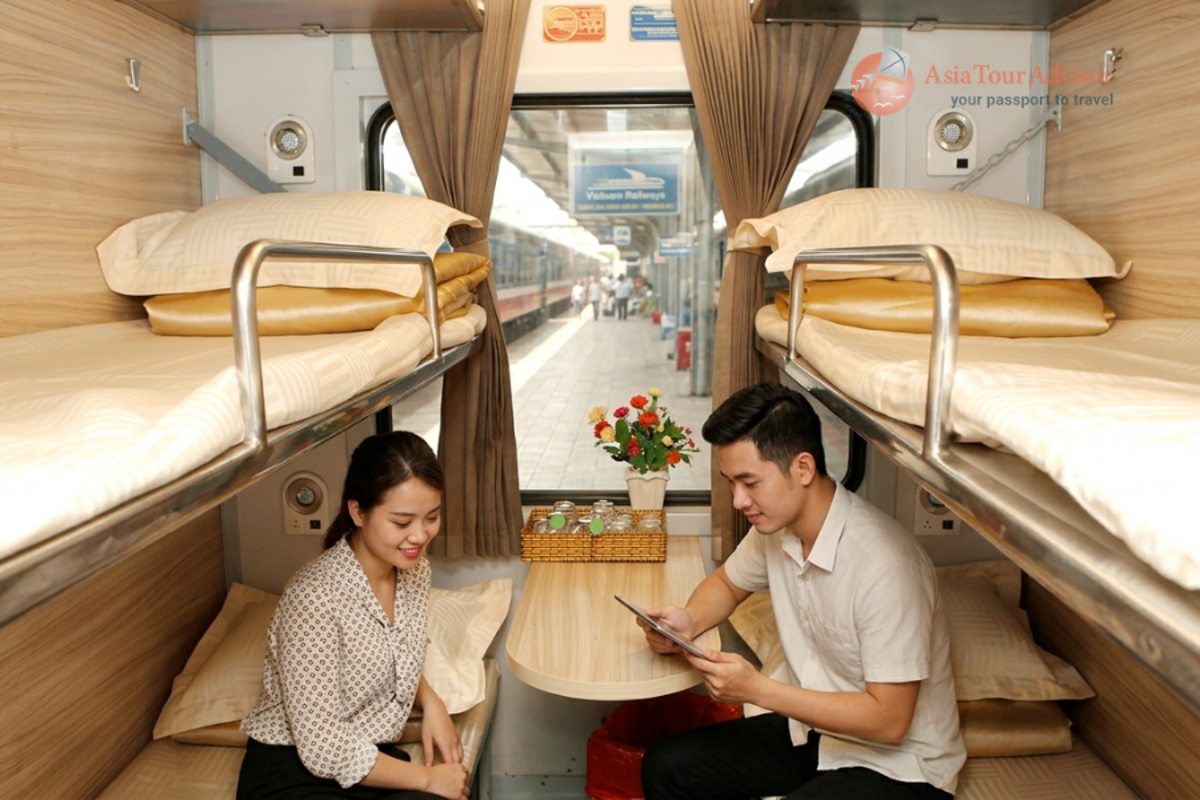
Exploring Vietnam by rail provides a distinct way to observe the country's diverse scenery and local interactions. For many travelers, the convenience of an electronic train ticket enhances this experience. Understanding the process for booking and using these digital tickets is essential for a smooth journey across Vietnam's railway network.
Understanding Vietnam's Electronic Train Tickets
A Vietnam Railway e-ticket serves as a digital equivalent to a traditional paper ticket. This electronic format offers several advantages, primarily convenience and efficiency. Passengers can print their e-ticket at home, either in color or black and white, and it remains valid for travel. A significant benefit is the ability to reprint a lost ticket, removing concerns about misplacing physical copies. Furthermore, it eliminates the need to wait for tickets to arrive by mail or to queue at the station for collection or exchange, saving valuable time.
Each e-ticket is issued specifically to an individual and cannot be transferred to another person. The ticket contains several pieces of crucial information for the journey:
- Ga đi – Ga đến: The names of the departure and arrival train stations.
- Tàu/ Train: The specific train code for your service.
- Ngày đi/ Date: The scheduled departure date.
- Giờ đi/Time: The exact departure time.
- Toa/Coach: Your assigned coach number. Trains typically feature various coach types, including those with seats and those with multiple cabins offering different bed configurations.
- Chỗ/Seat: Your specific seat or bed number. This detail specifies the type of accommodation:
- Ngồi mềm: Soft Seat
- Nằm khoang 6 điều hoà T3: Hard Bed – Top Bunk in a 6-berth compartment
- Nằm khoang 6 điều hoà T2: Hard Bed – Middle Bunk in a 6-berth compartment
- Nằm khoang 6 điều hoà T1: Hard Bed – Bottom Bunk in a 6-berth compartment
- Nằm khoang 4 điều hoà T2: Soft Bed – Top Bunk in a 4-berth compartment
- Nằm khoang 4 điều hoà T1: Soft Bed – Bottom Bunk in a 4-berth compartment
- Thông tin hành khách: Passenger details, including your full name (Họ tên/Full name), identification document type (Giấy tờ/passport), and ticket category (Loại vé/Ticket).
Booking Your Vietnam Railway E-Ticket
Acquiring a Vietnam Railway e-ticket typically involves a straightforward online process. While specific interfaces may vary, the general steps for purchasing your ticket are consistent:
- Select Your Journey: Begin by choosing your desired route, travel date, and the number of passengers. Once these details are entered, proceed with the search function to view available options.
- Choose Your Train Service: The system will then display a list of train services, showing train names, departure and arrival times, various ticket types, and their corresponding prices. Review these options and select the one that best suits your travel plans, then continue to the next stage.
- Provide Passenger Information: On the subsequent page, you will be prompted to review your selected journey details and accurately complete all required passenger information fields. After verifying the details, proceed to the payment section.
- Complete Payment: Finalize your purchase using a credit card. Upon successful payment, you should receive an initial notification email. Subsequently, a booking confirmation or your actual e-tickets will be sent to your registered email address.
For those planning overnight train journeys, understanding the different bed configurations and booking well in advance is advisable, especially during peak travel periods.
Boarding Procedures with an E-Ticket
The process for boarding a train in Vietnam with an e-ticket is generally consistent, though minor variations may occur depending on the specific station or time of day. Adhering to these steps will help ensure a smooth transition from arrival at the station to boarding your train:
- Print Your E-Ticket: Ensure you have a printed copy of your e-ticket. This can be either in color or black and white; both are acceptable for presentation.
- Prepare Identification and Arrive Early: Carry your passport or other valid identification document with you. It is recommended to arrive at the train station at least 30 minutes before your scheduled departure time to allow for any unforeseen delays or procedures.
- Present Documents to Conductor: Upon reaching the platform access point, present your printed e-ticket along with your identification to the conductor. After verifying that all information matches, you will be granted permission to proceed to the train.
- Retain Your Ticket: It is crucial to keep your e-ticket accessible throughout your entire journey. Conductors may request to scan or inspect tickets at various points during the trip.
E-Tickets Versus Vouchers: Key Differences
While electronic tickets offer direct boarding, some private railway operators in Vietnam utilize a voucher system. Understanding this distinction is important for travelers to prepare correctly for their journey.
| Ticket Type | Companies Using This System | Boarding Process |
|---|---|---|
| E-Ticket | Vietnam Railways, New Livitrans Express, Violette Train | Print at home, present with ID directly for boarding. |
| Voucher | Victoria Express, Fanxipan Express, King Express, Orient Express, Sapaly Express, Chapa Express, Saigon Golden Train, Hanoi-Nanning-Beijing international service | Receive voucher via email, must exchange for a physical ticket at the station before boarding. |
If your journey involves a private railway company that issues vouchers, remember that you will need to allocate additional time at the station to collect your physical ticket. This step is mandatory before you can proceed to the platform. For travelers heading towards destinations like Sapa, where some private companies operate, this distinction is particularly relevant. For example, those planning to visit Mount Fansipan via Sapa might encounter these private train services.
Important Travel Advice and Cancellation Policies
To enhance your train travel experience in Vietnam, consider the following practical recommendations:
- Advance Booking: During regular seasons, it is advisable to book your train tickets at least one week before your travel date. For high seasons, securing your ticket as early as possible is strongly recommended due to increased demand.
- Ticket Price Inclusions: The final price paid for your ticket typically covers all applicable taxes and fees. It also includes an allowance for 20kg of checked baggage per passenger.
- Identification: Always carry your identification documents or passport. These are essential for boarding and may be requested by staff at any point during your journey.
- Personal Belongings: Remain vigilant and take care of your personal items throughout your trip.
- Food and Drinks: While food and beverages may be available for purchase on some trains, packing your own snacks and drinks in advance is an option for personal preference or dietary needs. You might also find unique local products and traditional crafts at various stops or near stations.
Cancellation Policy for Thong Nhat Trains:
The cancellation and amendment policies can vary between different train services. The following guidelines apply specifically to Thong Nhat trains, which are a popular choice for routes connecting major cities like Hanoi and Ho Chi Minh City. Policies for other train services may differ, so it is always best to verify directly with your booking provider.
- A 30% fee of the ticket cost will be applied for cancellations or amendments made after the e-ticket (for Thong Nhat trains) or booking confirmation (for Sapa trains) has been issued.
- A 50% fee of the ticket cost will be applied for cancellations or amendments made within 5 days prior to the departure date.
- A 100% fee of the ticket cost will be applied for cancellations or amendments made within 3 days prior to the departure date.
Frequently Asked Questions
What is a Vietnam Railway e-ticket?
A Vietnam Railway e-ticket is an electronic version of a train ticket that can be printed by the passenger. It allows for convenient travel without needing a physical ticket exchange at the station, and it can be reprinted if lost. Each e-ticket is personal and cannot be transferred.
What documents are needed to board a train with an e-ticket?
To board a train with an e-ticket, you must present a printed copy of your e-ticket along with your valid passport or other acceptable identification document to the conductor at the platform access point.
How early should I arrive at the train station?
It is recommended that passengers arrive at the train station at least 30 minutes before the scheduled departure time. This allows ample time for ticket verification and finding your platform without rush.
Can I cancel or change my Vietnam train e-ticket?
Cancellation and amendment policies vary by train service. For Thong Nhat trains, fees apply based on how close to the departure date the change is made: 30% after issuance, 50% within 5 days, and 100% within 3 days. Always check the specific policy for your ticket type.
Are all Vietnamese train companies using e-tickets?
No, not all companies use e-tickets directly for boarding. Vietnam Railways, New Livitrans Express, and Violette Train issue e-tickets. Other private operators, such as Victoria Express and Fanxipan Express, issue vouchers that require exchange for a physical ticket at the station before travel.








