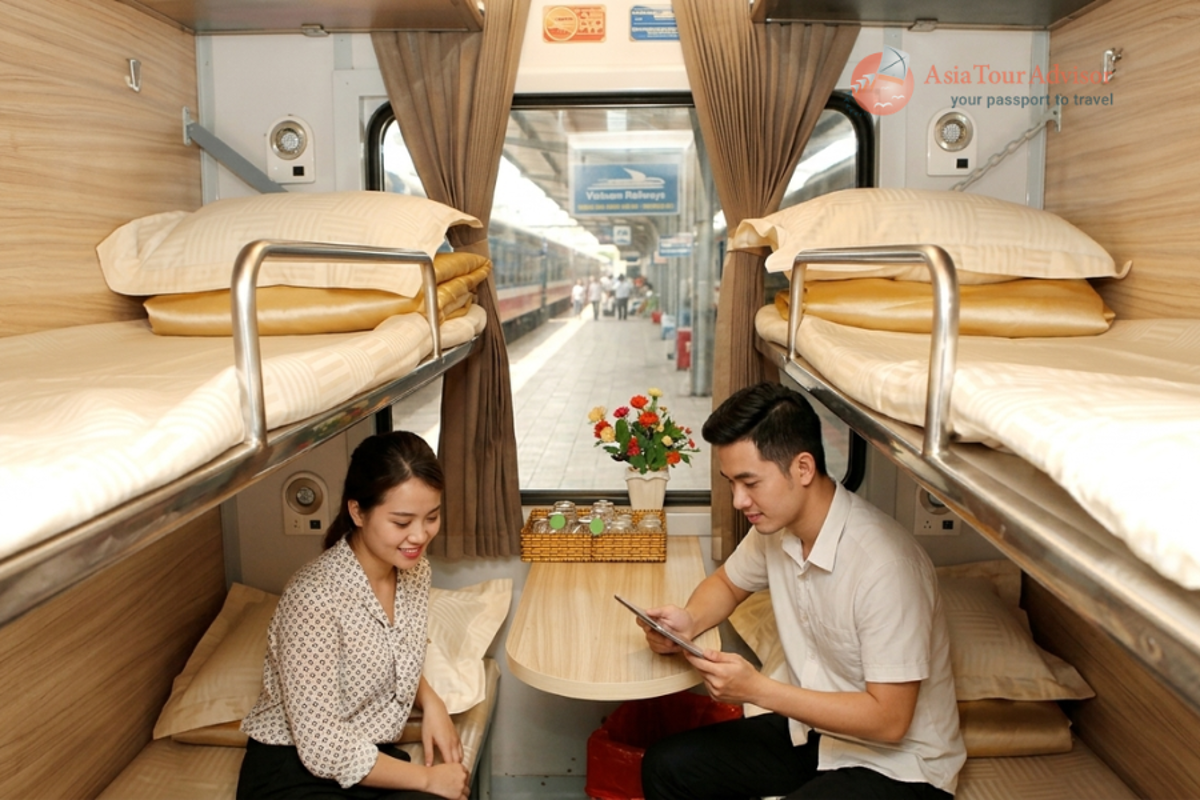
Opting for an overnight train in Vietnam presents a unique travel experience, allowing passengers to cover significant distances while resting. This mode of transport offers a practical alternative to daytime travel, enabling visitors to wake up in a new destination refreshed and ready to explore. Beyond mere transit, these journeys provide a glimpse into local life and the country's diverse scenery.
Understanding the various ticket options, booking procedures, and practical considerations is key to a smooth and enjoyable rail adventure. From budget-friendly seats to private cabins, the Vietnamese railway system caters to a range of preferences and travel styles, making it a popular choice for both domestic and international travelers.
Why Choose Rail Travel in Vietnam?
Vietnam's railway network is more than just a means of getting around; it represents a connection to the country's heritage and daily rhythm. Passengers often share conversations with fellow travelers, observe local vendors, and witness the landscape unfold from a unique vantage point. The consistent motion of the train can be surprisingly conducive to sleep, providing a comfortable alternative to other forms of long-distance travel.
Compared to bus services, trains generally offer more room to move around and a smoother ride. While flights provide speed, trains are typically more economical for long distances and offer a ground-level perspective of the country's geography that air travel cannot. Combining travel and accommodation, an overnight train journey can be an efficient choice for those looking to maximize their time and budget.
Key Overnight Train Routes Across Vietnam
The backbone of Vietnam's rail system is the Reunification Express, which spans the length of the country along its coast. Several routes are particularly popular for overnight travel, each offering distinct experiences and access to different regions.
- Hanoi to Sapa (Lao Cai) - The Mountain Connection: This route typically takes 7 to 8 hours overnight. Trains usually depart Hanoi between 9:00 PM and 10:00 PM, arriving in Lao Cai between 5:00 AM and 6:00 AM. It's the primary way to reach the northern highlands, known for their mountain vistas, misty valleys, and terraced rice fields. From Lao Cai, travelers can easily access Sapa. For those planning further exploration of the region, consider experiencing Mount Fansipan's cable car for panoramic views.
- Hanoi to Da Nang/Hue - Central Coast Passage: Journeys on this segment range from 12 to 18 hours, depending on the specific destination. Departures are flexible, occurring throughout the day from early morning (around 6:10 AM) to late evening (after 10:00 PM). The section between Hue and Da Nang is particularly noted for its coastal scenery.
- Ho Chi Minh City to Nha Trang - The Coastal Link: This overnight trip generally lasts 7 to 9 hours. Multiple trains run daily, with options from early morning to late night. Passengers can anticipate views of coastal plains and sunrises over the South Central coast, appealing to those who enjoy beach destinations.
- Ho Chi Minh City to Phan Thiet/Mui Ne - Beach Access Express: A shorter route, taking 4 to 5 hours, with both daytime and nighttime services available. This line showcases sandy beaches, arid landscapes, and relaxed seaside communities.
Understanding Overnight Train Ticket Classes
The Vietnamese railway system provides a range of seating and sleeping options, allowing travelers to select based on their comfort requirements and budget. Familiarizing yourself with these choices can help in making an informed decision for your journey.
Hard Seat
The hard seat option is the most economical, featuring wooden benches designed for two to three passengers. While it is the most budget-friendly choice, it offers minimal comfort and is generally not recommended for extended overnight travel. It is better suited for shorter daytime trips, typically under four hours.
- Advantages: Lowest cost, window access for views, face-to-face seating for interaction, overhead and under-bench luggage storage.
- Disadvantages: Lacks padding, can be crowded and noisy, limited recline, not ideal for sleeping.
- Best For: Budget-conscious travelers on short daytime routes.
- Price Range (Current as of source material, verify upon booking): From VND 125,000 (approximately USD 5).
Soft Seat
Soft seats provide a basic cushioned option with some reclining capability, offering a step up in comfort from hard seats. These carriages are typically air-conditioned. While they do not provide the amenities of airplane seats like tray tables or extensive legroom, they are a suitable and affordable choice for daytime travel on short to medium-length routes.
- Advantages: Air-conditioned comfort, adequate padding for medium distances, two-seat configuration with overhead luggage space, generally clean facilities.
- Disadvantages: Still a seat, not suitable for sleeping, limited legroom, can become uncomfortable on journeys exceeding six hours.
- Best For: Travelers preferring daytime journeys with more comfort than basic seating.
- Price Range (Current as of source material, verify upon booking): From VND 121,000 (approximately USD 4.8) for short routes, up to VND 560,000 (approximately USD 22.4) for longer journeys like Hanoi to Hue.
6-Berth Compartment
For those seeking an actual bed on a budget, the 6-berth compartment is available. These compartments feature triple bunks (upper, middle, and lower) on each side, equipped with thin mattresses, pillows, and blankets. Each compartment includes a door, window, curtain, night lamp, and a small table.
- Advantages: Provides a bed, most affordable sleeping option, conducive to social interaction. The middle bunk is often preferred for sleeping, while the bottom bunk offers better daytime comfort and window access.
- Disadvantages: Limited headroom, shared space with five other passengers, potential for noise.
- Best For: Budget travelers, shorter overnight trips.
- Price Range (Current as of source material, verify upon booking): From VND 245,000 (approximately USD 9.8) for short routes, up to VND 642,000 (approximately USD 25.7) for longer ones like Hanoi to Hue.
4-Berth Compartment
A popular choice for many travelers, the 4-berth compartment offers enhanced comfort. It includes two upper and two lower beds with thicker mattresses, individual reading lights, and small tables that often feature charging outlets. These compartments provide more space and privacy than the 6-berth option.
- Advantages: Improved mattress and bedding quality, increased space and privacy, power outlets for charging devices, lockable doors for security, individual reading lights, better ventilation.
- Disadvantages: Higher cost than 6-berth compartments, still requires sharing space unless the entire compartment is booked.
- Best For: Most travelers seeking a balance of comfort and value, families, and couples.
- Price Range (Current as of source material, verify upon booking): From VND 250,000 (approximately USD 10) for short routes, up to VND 875,000 (approximately USD 35) for longer journeys.
2-Berth VIP Cabin
Representing the highest level of luxury on Vietnamese sleeper trains, the 2-berth VIP cabin features only two lower beds within a private compartment. These cabins come with premium bedding, and amenities such as meals, bottled water, snacks, tissues, and mugs are typically included in the fare.
- Advantages: Maximum privacy for two passengers, premium bedding and amenities, meals included, quiet and comfortable environment.
- Disadvantages: Very limited availability, approximately double the cost of a 4-berth soft sleeper, not available on all routes or schedules, requires early booking during peak seasons.
- Best For: Luxury travelers, honeymooners, or those prioritizing maximum privacy.
- Price Range (Current as of source material, verify upon booking): From VND 1,000,000 (approximately USD 40) for shorter trips, up to VND 2,077,000 (approximately USD 83.1) for Hanoi to Hue.
Comparison of Overnight Train Ticket Classes (Prices are approximate and subject to change)
| Route | Hard Seat (VND/~USD) | Soft Seat (VND/~USD) | 6-Berth Cabin (VND/~USD) | 4-Berth Cabin (VND/~USD) | 2-Berth VIP Cabin (VND/~USD) |
|---|---|---|---|---|---|
| Hanoi → Sapa (Lao Cai) | 125,000 (~5) | 155,000 (~6.2) | N/A | 690,000 (~27.6) | 1,300,000 (~52) |
| Hanoi → Da Nang/Hue | 380,000 (~15.2) | 560,000 (~22.4) | 642,000 (~25.7) | 875,000 (~35) | 2,077,000 (~83.1) |
| Ho Chi Minh City → Nha Trang | 200,000 (~8) | 280,000 (~11.2) | 358,000 (~14.3) | 450,000 (~18) | 1,400,000 (~56) |
| Ho Chi Minh City → Phan Thiet | N/A | 121,000 (~4.8) | 245,000 (~9.8) | 250,000 (~10) | N/A |
How to Secure Your Train Tickets
Booking train tickets in Vietnam has become more convenient, offering both digital and traditional methods to accommodate various traveler preferences.
Online Booking
Booking online allows travelers to review different train options, compare prices, and select their preferred ticket class from anywhere. This method is suitable for those who prefer to plan ahead and secure their tickets in advance, especially during peak travel periods.
To book online:
- Visit the official website: dsvn.vn, or use the mobile application “Duong Sat Viet Nam”. Alternatively, third-party platforms such as Baolau or 12Go Asia are also available.
- Choose your departure and arrival stations, travel date, and the number of passengers.
- Select your desired train service and ticket class (e.g., soft seat, 4-berth sleeper).
- Complete passenger details and proceed with payment using a credit or debit card.
- An e-ticket or QR code will be sent to your email, which you can present upon boarding.
Tip: It is advisable to book 2 to 3 days in advance for common routes. For VIP or sleeper cabins, especially during holidays, booking at least a week early is recommended.
In-Person Booking at Train Stations
For spontaneous travelers, those who prefer cash payments, or individuals less familiar with online systems, purchasing tickets directly at train stations remains a viable option. Interacting with ticket agents in person can also facilitate clarifying options or requesting specific berths.
To book at the station:
- Go to the nearest train station (e.g., Hanoi Railway Station, Saigon Station).
- Locate the ticket counter; signage is often provided in multiple languages.
- Provide your route, travel date, desired ticket class, and number of passengers.
- Be prepared to show your passport for identification if requested.
- Pay with cash or card and receive a printed ticket.
- Arrive at the station 30 to 60 minutes before departure for boarding.
Tip: Visiting the station during off-peak hours, such as mid-morning or mid-afternoon, can help avoid long queues. While solo travelers might find tickets closer to departure, families generally benefit from booking in advance.
Essential Advice for Your Overnight Journey
Considering a few practical aspects before your trip can significantly enhance your overnight train experience in Vietnam.
Luggage and Storage
While there isn't a strict weight limit for baggage on Vietnamese trains, space within carriages, particularly in sleeper cabins, is finite. Larger suitcases or backpacks can typically be stored under the lower berths or on the overhead racks provided in each compartment. It is wise to pack efficiently to ensure your belongings fit comfortably.
Food and Drinks
Food service varies by train and ticket class. Some sleeper tickets, particularly in VIP cabins, may include basic meals or complimentary water, tea, or light refreshments. Additionally, local vendors often board trains at various stops, selling items like bánh mì, rice dishes, and beverages, offering an opportunity to sample regional foods. Travelers can also bring their own food and bottled water, especially if they have specific dietary needs or preferences. Exploring unique purchases and souvenirs in Vietnam might also include local snacks to enjoy on your journey.
Safety and Cleanliness
Vietnam's railway system is generally considered safe. Higher-class carriages, such as air-conditioned soft sleeper and VIP cabins, often have enhanced security and are typically occupied by other tourists or families. However, cleanliness standards can vary between trains and may decline over longer routes. Toilets are functional but can become less tidy as the journey progresses, particularly on older trains. Bringing personal supplies like toilet paper, wet wipes, and hand sanitizer is advisable for a more comfortable experience.
Booking Recommendations
To ensure you secure your preferred ticket class and route, especially for popular options like VIP or soft sleeper cabins, booking your train tickets in advance is crucial, ideally a week or more before your travel date. Utilize the official Vietnam Railways website (dsvn.vn) or reputable third-party agents like Baolau or 12Go Asia. For those interested in luxury train services, such as the Victoria Express or Livitrans, checking their dedicated websites for direct promotions or upgraded cabin options is recommended. Early booking is particularly important during peak seasons, including the Tet holiday, other Vietnamese public holidays, and the summer months.
Frequently Asked Questions
Do Overnight Trains Have Beds?
Yes, most overnight trains in Vietnam offer sleeper options with beds. These berths typically measure around 31 x 75 inches each. Depending on the ticket class, travelers can choose from 6-berth, 4-berth, or 2-berth VIP cabins. Each sleeping berth includes a mattress, pillow, and blanket for passenger comfort. However, if you book a hard or soft seat, you will only have a reclining seat, not a bed.
Do Overnight Trains in Vietnam Have Toilets?
Yes, overnight trains in Vietnam are equipped with toilets. The condition and style of these facilities can differ significantly based on the train type and class. Newer trains, such as the SE series, and private operators like Livitrans Express, generally provide cleaner, more modern facilities, often with Western-style toilets. First-class and VIP cabins typically offer better toilet conditions than standard sleeper cars. It is recommended to carry your own toilet paper and hand sanitizer for personal comfort.
Can I Get Food on The Vietnam Train?
Food and drink options are available on Vietnamese trains. Some sleeper tickets, especially for higher-end cabins like the 2-berth VIP, may include complimentary meals or light snacks. Additionally, train staff or local vendors frequently sell food and beverages onboard or at major station stops. Common offerings include rice boxes, instant noodles, soft drinks, and local snacks. However, the selection can be limited, so travelers with specific dietary needs or preferences might consider bringing their own food and bottled water.
Do Overnight Trains Have Showers?
No, overnight trains in Vietnam do not typically feature shower facilities. This is a common standard for most overnight train systems globally. For travelers undertaking long routes, such as Hanoi to Da Nang or Ho Chi Minh City to Nha Trang, it is advisable to plan for showering either before boarding the train or upon arrival at your destination.