
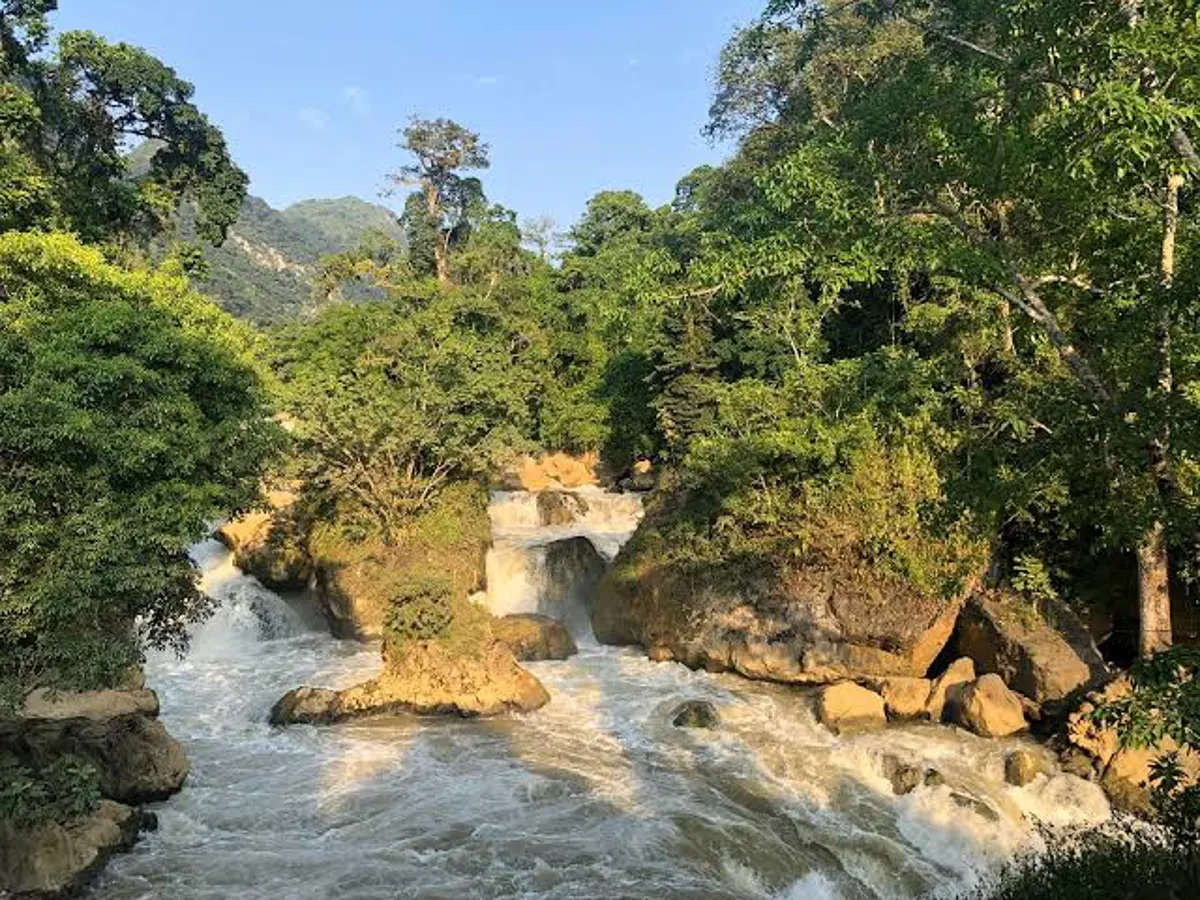
Ba Be National Park, located in Bac Kan Province, approximately 240 km north of Hanoi, encompasses an expansive area of over 23,000 hectares. This natural complex features waterfalls, deep rivers, valleys, lakes, and caves, all set amidst prominent mountain peaks. The region is also home to several ethnic communities. Ba Be Lake, a central feature, is actually composed of three interconnected lakes joined by wide channels, extending about 8 km in length. The lake's surface typically remains calm, making it suitable for boat excursions. The park received recognition as an ASEAN natural heritage site in 2004 and was designated a wetland of international importance in 2011, ranking third in Vietnam and 1938th globally.
A Natural Overview of Ba Be National Park
Ba Be National Park is characterized by its intricate system of rivers, lakes, and lowland evergreen forests, which thrive on limestone mountains. These ecosystems are nourished by three rivers—Ta Han, Bo Lu, and Leng—contributing to the park's rich biodiversity. The park's flora includes 1,268 plant species, with numerous valuable and rare varieties listed in the Red Books of Vietnam and the World. Notable timber trees include “Nghien,” “Dinh,” “Lim,” “Truc Day,” and “Lat Hoa.” “Truc Day” is a distinctive bamboo species found specifically on the park's cliffs, enhancing the landscape's unique appearance. Scientists, both domestic and international, consider Ba Be National Park a significant center for orchid diversity and endemism, not only within Vietnam but across Southeast Asia.
The park's aquatic and terrestrial fauna is equally diverse, supporting 470 vertebrate species and 106 fish species. At the heart of the park lies Ba Be Lake, positioned at an elevation of approximately 178 meters above sea level. It stretches for up to 8 km with a width of 500 meters, making it Vietnam's largest and highest natural freshwater lake. The lake is considered to hold substantial natural and ecological benefits for Vietnam. The local Tay people refer to it as “Slam Pe,” meaning “three lakes,” specifically Pe Leng, Pe Lu, and Pe Lam. This continuous body of water, fed by countless small streams, extends nearly 8 km in a north-to-south direction. Due to its impressive scale and scenery, Ba Be is sometimes likened to Halong Bay on land.
The Legend Behind Ba Be Lake
Local folklore offers a captivating explanation for the formation of Ba Be Lake. The tale recounts a time when an elderly beggar woman arrived in a village, seeking sustenance and compassion. Despite her pleas, most villagers shunned her, fearing her ragged appearance. However, a kind widow and her son offered her shelter and food, showing her hospitality.
During the night, the widow awoke to a loud snore and was astonished to see a large dragon sleeping where the beggar had been. Trembling but silent, she dared not cry out. By dawn, the dragon was gone, and the beggar woman reappeared, preparing to depart. Before leaving, she presented the widow with a packet of ash and some patties. She advised the widow to sprinkle the ash around her house that evening and to seek high ground if she wished to escape. The patties, she explained, contained rice for nourishment and husks for survival. The old woman then vanished. The widow and her son shared their strange encounter with the villagers, but their warnings were dismissed. That night, during a village celebration, water erupted from the ground, rapidly flooding the area. Miraculously, only the widow's house remained unaffected. Remembering the beggar's words, the woman dropped the husks into the water, which transformed into a small boat. They used this vessel to rescue fellow villagers, ensuring no lives were lost. The site where the water emerged is now known as Ba Be Lake.
Planning Your Trip: When to Visit and How to Arrive
The most favorable periods for visiting Ba Be Lake are during spring and winter, which correspond to the dry season. The weather during August and September is generally pleasant, though this time of year typically sees the highest number of visitors to the park. Even during the green season, a trip to Ba Be Lake is considered worthwhile for its natural beauty.
Ba Be National Park is situated approximately 240 km north of Vietnam's capital city, Hanoi, within Bac Kan Province. The journey by road usually takes about six hours, with travelers often noting the scenic views along the route. Options for reaching Ba Be include taking a local bus, riding a motorbike, or arranging a private car. For those who prefer a more personalized travel experience, booking a private car for the journey from Hanoi to Ba Be National Park is a common choice. For those planning extensive travel across Vietnam's northern regions, other destinations like Sapa offer distinct experiences, such as ascending Mount Fansipan by cable car.
Accommodation Options in Ba Be National Park
For an authentic and culturally rich stay in Ba Be National Park, opting for a homestay with a local family is highly recommended. Several local minority communities operate clusters of homestay accommodations within designated areas of the park. These establishments typically offer simple, clean, and comfortable lodging, often with shared bathroom facilities. Examples of such homestays include Mr Linh’s Homestay, Ba Be Lakeview Homestay, The Sang Homestay, Quynh Mai Homestay, and Ba Be Green Homestay. Accommodation prices, which usually include meals, start at approximately 15 USD per person per night.
Alternatively, the Sai Gon – Ba Be Resort, a state-run guesthouse, is located at the entrance to the National Park. This option provides a more private and standard lodging experience. Another choice is the Ba Be Lakeside Bungalow, which caters to those seeking a rustic retreat. This lodge aims to provide a complete escape from daily routines, focusing on nature immersion, and therefore bungalows do not include televisions or some standard hotel services. The table below provides a comparison of these accommodation types.
| Accommodation Type | Description | Typical Price (USD/person/night) | Key Features |
|---|---|---|---|
| Homestays | Operated by local minority families within the park | Starts at $15 (includes meals) | Authentic cultural experience, simple, clean, shared bathrooms, close to local life |
| Sai Gon – Ba Be Resort | State-run guesthouse at park entrance | Not specified (more standard) | More privacy, standard facilities, less integrated with local communities |
| Ba Be Lakeside Bungalow | Lodge aiming for rustic, nature-focused experience | Not specified (rustic experience) | No TV, basic services, focus on natural immersion and escape |
Activities and Experiences in Ba Be
Ba Be National Park, located in Ba Be District, Bac Kan Province, offers a wide array of activities for visitors. The region is ideal for sightseeing, with its diverse flora and fauna, unique geology, and varied landscapes. Points of interest include Fairy Pond, An Ma Temple, and Dau Dang waterfall, providing ample opportunities for exploration.
One of the most effective ways to experience the area is by kayaking on the three lakes. This activity is suitable for those seeking adventure, while guided motorboat tours are available for a more relaxed pace. Kayaking allows closer access to islets, hidden caves, and local fishing villages. It also provides an opportunity to approach the limestone karsts and discover secluded sections of Ba Be Lake and the Nang River, often reaching areas inaccessible to larger vessels. The absence of an engine makes kayaking an environmentally conscious method of travel, minimizing air and noise pollution.
The Ba Be district is widely regarded as one of Vietnam's premier trekking and hiking destinations, both by locals and visitors. The landscape is dominated by the Pia Booc mountain range, reaching a height of 1527 meters. The scenery varies significantly, from dense vegetation to terraced rice fields covering the mountainsides. Trekking offers a chance to interact with local residents and share experiences, particularly during stops for refreshments or meals. Engaging a tour guide is beneficial, as they possess knowledge of optimal routes, scenic viewpoints, and local stories about the park, its ethnic groups, and wildlife.
Cycling is another excellent way to explore Ba Be. Sports bicycles can often be rented through tour guides in the area. The primary roads surrounding the national park are generally well-maintained and experience minimal traffic. A full day of cycling can allow visitors to reach attractions such as Hua Ma Cave, Thac Bac Waterfall, and various local villages. For those interested in local traditions, fishing with community members offers a unique insight into rural life in Northern Vietnam. Locals employ ancestral techniques, using slender, long boats to catch shrimp and catfish, providing an opportunity for visitors to observe and potentially share fishing skills.
Meeting the ethnic minority groups is a significant cultural experience in Ba Be. Three primary ethnic communities reside in and around the park: the Tay, the Dzao, and the H’mong. These groups form communities ranging from small clusters of houses to larger villages. Pac Ngoi village is a particularly noteworthy destination, home to a substantial Tay community with over 40 traditional stilt houses preserved on a hillside. The Tay culture here is actively maintained by its people. Na Nghe Village, a smaller Dzao community, is another welcoming place, offering rewarding views of the valley after a hike through the natural surroundings. H’mong communities tend to be more secluded but maintain a strong sense of collective identity.
The Long Tong Festival, meaning “go to the field” in Tay and Nung languages, is one of Vietnam's oldest and most culturally significant celebrations. This festival honors the first rice crop of the new lunar year, with ethnic communities expressing wishes for favorable weather, abundant harvests, comfortable lives, good health, and happiness for all villagers. On the 9th and 10th days of the first lunar month, people from various ethnic minority villages gather on the riverbank, dressed in their finest traditional attire. The central event of the festival is the worship of the God of Agriculture, complemented by exciting outdoor traditional games such as rice cooking and singing contests.
Local Cuisine and Dining in Ba Be
The culinary offerings are a compelling reason to extend a stay in the Ba Be area. Among the many local specialties, “Lon Cap Nach” stands out. This dish, whose name translates to “pig carried under the arm,” refers to the small size of the pigs, typically around 10 kg, which are raised freely in the surrounding fields and forests. Their meat is known for its sweet and tender qualities. “Com Lam,” or bamboo tube rice, is another popular and delicious item to sample. A common side dish is chayote, often served with sesame, where the mild sweetness of the vegetable complements the nutty flavor of the sesame. During local feasts, visitors may also have the opportunity to try “Noc Suong,” the traditional local rice wine. These dishes are frequently part of the meals enjoyed at local homestays.
For dining outside of homestays, several local restaurants offer meals typically ranging from $5 USD to $15 USD. These establishments provide a taste of regional flavors in a casual setting.
| Restaurant Name | Address | Price Range (USD) |
|---|---|---|
| Pho Nui Bac Kan restaurant | 11C Duc Xuan Ward | $5 - $15 |
| Tam Cuong Bac Kan restaurant | Group 11, Song Cau Ward | $5 - $15 |
| Boong Hay Bac Kan restaurant | Tran Hung Dao Street | $5 - $15 |
| Cay Me restaurant | No 32, 8b Group, Tran Hung Dao Street | $5 - $15 |
| Tinh Tuong restaurant | Phu Thong Town, Bach Thong | $5 - $15 |
Beyond Ba Be: Nearby Attractions
From Ba Be Lake, travelers can extend their adventures to explore other attractions in the wider region, particularly in Cao Bang Province. Notable destinations include Ban Gioc Waterfall, recognized as one of Vietnam’s top waterfalls, Nguom Ngao Cave, the Pac Po Historical Site, and the scenic Trung Khanh and Phong Nam Valleys. These locations offer additional opportunities to experience the natural beauty and historical significance of Northern Vietnam.
Frequently Asked Questions
What is Ba Be National Park known for?
Ba Be National Park is recognized for its extensive freshwater lake system, dense evergreen forests, and dramatic limestone mountains. It is home to diverse plant and animal species, including rare orchids, and is culturally significant due to its resident ethnic minority communities. The park holds designations as an ASEAN natural heritage site and a Ramsar wetland.
What are the main activities available in Ba Be?
Visitors to Ba Be can engage in various activities such as kayaking on the lakes, trekking and hiking through mountain trails, cycling around the park, and traditional fishing with locals. Cultural experiences include visiting ethnic minority villages like Pac Ngoi and attending the Long Tong Festival during the lunar new year.
How far is Ba Be National Park from Hanoi?
Ba Be National Park is located approximately 240 kilometers north of Hanoi. The journey by road typically takes about six hours, offering scenic views along the way through Bac Kan Province.
What types of accommodation can I find?
Accommodation options primarily include homestays with local ethnic families, offering an authentic cultural experience with basic, comfortable facilities and meals. There is also a state-run resort at the park entrance for more standard lodging and a rustic lakeside bungalow option focused on nature immersion.
When is the best time to visit Ba Be National Park?
The most suitable times to visit Ba Be National Park are during the spring and winter months, which constitute the dry season, for pleasant weather. While August and September are also agreeable, they are typically the busiest periods for the park.








