A 14-day trip offers an excellent timeframe to experience the primary attractions of both Vietnam and Cambodia, encompassing their rich cultural heritage, historical depth, and natural splendor. This duration allows travelers to visit major cities, revered ancient sites, and scenic natural environments, providing a well-rounded perspective on these two distinct nations.
Designing Your Two-Week Vietnam and Cambodia Journey
When planning a two-week expedition across Vietnam and Cambodia, travelers can select from several distinct approaches, each designed to highlight different facets of these countries. Options range from a comprehensive overview for first-time visitors to specialized trips focusing on cultural immersion, outdoor activities, or relaxation. Understanding these styles helps in tailoring an experience that best suits individual interests and pace.
The following table outlines the primary characteristics of four suggested travel styles, detailing their suitability, typical routes, and modes of transportation. This comparison assists in identifying the most appropriate itinerary for your preferences.
| Best for | Route | Transportation |
|---|---|---|
| Classic Exploration for First-timers | Hanoi - Halong Bay - Hoi An - Ho Chi Minh City - Mekong Delta - Phnom Penh - Siem Reap | Plane, car, cruise, boat |
| Cultural Immersion | Hanoi - Halong Bay - Hoi An - Hue - Ho Chi Minh City - Mekong Delta - Siem Reap | Plane, car, cruise, boat |
| Adventure and Nature | Hanoi - Cat Ba Island - Ninh Binh - Hue - Phong Nha - Ho Chi Minh City - Mekong Delta - Siem Reap | Flights, car, boat |
| Relaxation and Wellness | Ho Chi Minh City - Mekong Delta - Phnom Penh - Battambang - Siem Reap | Flights, car, boat, train |
Classic Exploration for First-Time Visitors
For those new to Vietnam and Cambodia, a 14-day classic itinerary provides a broad introduction to both nations. This approach allows for an understanding of their diverse cultures, significant historical narratives, and remarkable natural settings. Vietnam, with its elongated geography, presents varied regional cultures, distinctive culinary traditions, and unique landscapes from north to south, while Cambodia is recognized for its ancient temples and historical ruins.
A typical journey begins in Hanoi, Vietnam's capital, for two days, exploring historical sites and the Old Quarter. Days three and four involve an overnight cruise in Halong Bay, followed by travel to Da Nang and two days in Hoi An. Days seven and eight are dedicated to Ho Chi Minh City, then a two-day excursion to the Mekong Delta. The itinerary then shifts to Cambodia, with a full day in Phnom Penh on day twelve, concluding with two days exploring Siem Reap and the Angkor Wat complex.
Hanoi: Days 1-2 Highlights
Hanoi, the capital of Vietnam, offers a blend of historical locations, the lively 36 Old Streets, and traditional Vietnamese cuisine. Visitors can wander through the Old Quarter, sample street food, and browse for traditional handicrafts. Notable sites include the Temple of Literature, Ho Chi Minh Mausoleum, Hoa Lo Prison, and One Pillar Pagoda. Proper attire, covering shoulders and knees, is advised when visiting sacred places.
- Temple of Literature (Van Mieu): Dedicated to Confucius and Vietnam's first national university. Entrance fee: US $3.
- Ho Chi Minh Mausoleum: The final resting place of Ho Chi Minh, reflecting national respect. Entrance fee: US $1.
- Hoa Lo Prison: Offers insights into Vietnam's history during the French colonial period and the Vietnam War. Entrance fee: US $2, audio guide: US $4.
- One Pillar Pagoda: A historic Buddhist temple known for its unique lotus-like architecture. Free admission.
- Thang Long Water Puppet Theater: Enjoy a traditional water puppet show at 57B Dinh Tien Hoang Street, facing Hoan Kiem Lake. Tickets from US $8.
- West Lake: A peaceful area with cafes and restaurants. Maison de Tet Decor (58 Tu Hoa, Quang An, Tay Ho, from US $4), 46 Degrees (189 Nghi Tam, Yên Phu, Tay Ho, from US $4), Maii Bistro (46 Lac Long Quan, Tay Ho, from US $5).
- Ta Hien Street (Beer Street): A lively nightlife spot in the Old Quarter. The Blues Bar (2B Ta Hien, Hang Buom, Hoan Kiem, from US $3), Hidden Pub Hanoi (12 Ta Hien, Hang Buom, Hoan Kiem, from US $4), Local Bar (16 Ta Hien, Hang Buom, Hoan Kiem, from US $4).
- Hoan Kiem Lake Pedestrian Street: Open every weekend from Friday 19:00 to Sunday midnight for walks, street food, and markets.
Halong Bay: Days 3-4 Cruise Experience
A cruise through Halong Bay, a UNESCO World Heritage site, is a highlight. An overnight cruise is often recommended for a more comprehensive experience, though day cruises are available for shorter visits. For those desiring extended time on the water, a three-day, two-night cruise is an option. The best weather for cruising is typically from October to December. Wi-Fi is generally available but may not be consistently stable. Meals are usually included, but drinks might incur additional charges.
- Mon Cheri Cruise (5*): From US $175 per person.
- Scarlet Pearl Cruise (5*): From US $170 per person.
- Orchid Classic Cruise (5*): From US $183 per person.
- Sena Cruises (4*): From US $144 per person.
- Amethyst Day Cruise (5*): From US $65 per person.
For those interested in exploring the coastal areas further, consider learning more about Halong Bay's best beaches for relaxation.
Hoi An Ancient Town: Days 5-6 Exploration
Hoi An, a UNESCO World Heritage site, served as a Southeast Asian trading port from the 15th to the 19th century. Its preserved architecture offers insights into Central Vietnam's cultural history. Exploring the town often requires an entrance ticket, typically costing around US $6 for access to five sites. Ticket stalls are located at various street intersections, including Phan Chu Trinh Street and Hai Ba Trung Street, Le Loi Street and Tran Phu Street, Tran Phu Street and Nguyen Hue Street, Tran Phu Street and Hoang Dieu Street, and Tran Phu Street and Bach Dang Street.
- Japanese Covered Bridge (Cau Pagoda): A 17th-century bridge blending Vietnamese, Chinese, and Japanese architectural styles.
- Fujian Assembly Hall (Phuc Kien Assembly Hall): Built around 1690, an example of traditional Chinese architecture.
- Tan Ky Old House: A well-preserved 18th-century merchant's house, passed down through seven generations.
- Tran Family Chapel: One of Hoi An's oldest houses, serving as a family worship place with a mix of Chinese, Japanese, and Vietnamese architectural elements.
Beyond its architecture, Hoi An is known for its local cuisine, including Cao Lau, Quang Noodles, Banh Mi, Mot Drink, and Banh Xeo. The town is also recognized for its tailoring shops, offering custom-made clothing, and traditional lantern crafting. Visitors can participate in lantern workshops to create colorful, delicate lanterns, making for unique souvenirs and purchases from a trip to Vietnam.
Ho Chi Minh City: Days 7-8 Urban Discoveries
Ho Chi Minh City, also known as Saigon, presents a dynamic combination of history, culture, and modern life, offering a different atmosphere compared to Hanoi. Key attractions include historical museums and architectural landmarks.
- War Remnants Museum: Showcases the history of the Vietnam War. Entrance fee: approximately US $1.6.
- Notre Dame Cathedral & Saigon Post Office: Iconic landmarks on Cong Xa Paris Street, featuring French colonial architecture. Free admission.
- Reunification Palace (Independence Palace): Former presidential workplace during the Vietnam War, now a museum. Entrance fee: approximately US $2.6.
- Cu Chi Tunnels: An extensive network of underground tunnels used during the Vietnam War. Entrance fee: Ben Duoc approximately US $4.3 per person, Ben Dinh approximately US $3.5 per person.
- Bui Vien Street: A center for nightlife with numerous bars, restaurants, and cafes.
- Bitexco Financial Tower: The Sky Deck on the 49th floor offers panoramic city views. Entrance fee from US $8.6 per person.
Mekong Delta: Days 9-11 Riverine Life
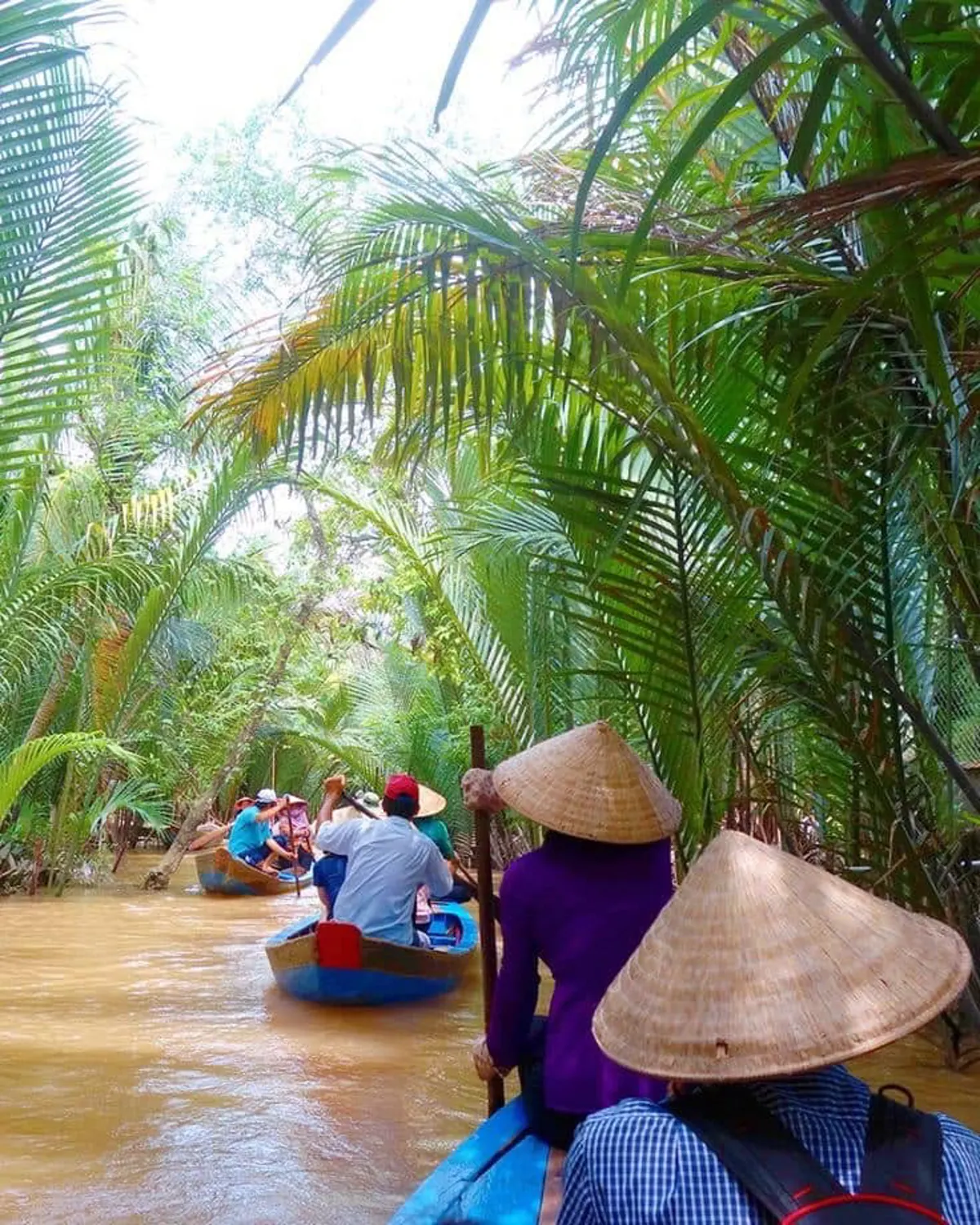
The Mekong Delta provides a tranquil yet active rural experience in South Vietnam, contrasting with Saigon's urban environment. This region, often called Vietnam's 'rice bowl,' offers opportunities to engage with life along its waterways.
- Sampan rides: Glide through small canals with local rowers for an intimate view.
- Culinary experiences: Sample local dishes like fried elephant-ear fish.
- Cai Rang floating markets: Observe commerce on the water, with vendors selling fruits and vegetables from boats.
- Countryside exploration: Discover villages by 'Xe Loi' for a closer look at local life.
- Orchard visits: Taste fresh tropical fruits directly from the trees.
Luxury cruise options on the Mekong River include RV Mekong Princess, RV La Marguerite, RV Mekong Navigator, and Heritage Line Jayavarman. Tra Su Cajuput Forest is another option for nature enthusiasts, offering an ecological sanctuary with diverse wildlife.
Phnom Penh: Day 12 Capital Exploration
Phnom Penh, Cambodia's capital, blends traditional charm with modern energy, making it an important stop for a two-week journey. The city features ancient temples, royal palaces, and sites that reflect the country's history and culture.
- Royal Palace: The official residence of the King of Cambodia, showcasing Khmer and French architectural styles. Entrance fee: US $10 per person.
- National Museum: Cambodia's largest museum of cultural history, focusing on the nation's historical and archaeological achievements. Entrance fee: US $10 per person.
- Wat Phnom: A temple on the city's only hill, significant to Khmer national identity. Entrance fee: US $1 per person.
- Tuol Sleng Genocide Museum: Formerly Security Prison 21 (S-21) under the Khmer Rouge, now a museum preserving this tragic period. Entrance fee: US $5 per person.
Phnom Penh's culinary scene offers a variety of traditional Cambodian dishes, such as Amok Trey (Cambodia’s national dish), Khmer Noodles (Num Banh Chok), and Samlar Kari (Chicken curry). For more dining options, refer to a dining guide to Phnom Penh.
Siem Reap: Days 13-14 Ancient Wonders
Siem Reap serves as a gateway to Cambodia's ancient world and a center for cultural activities. The primary attraction is Angkor Archaeological Park, requiring an Angkor Pass for entry. Tickets can be purchased at the on-site office or online.
- Angkor Pass Prices (Current as of 2024):
- 1 Day: $37 (valid for 5 days)
- 3 Days: $62 (valid for 10 days)
- 7 Days: $72 (valid for 30 days)
Key sites within Angkor Park include:
- Angkor Wat: The world's largest religious monument, known for its architecture and intricate carvings.
- Bayon Temple: Famous for its numerous serene stone faces on its towers.
- Ta Prohm: A temple largely preserved as it was found, demonstrating the interaction of tropical forest with architectural structures.
Exploring Vietnam and Cambodia: Alternative Travel Styles
Beyond the classic itinerary, Vietnam and Cambodia offer specialized travel experiences tailored to specific interests, ensuring every traveler finds a journey that resonates with them.
Cultural Immersion Itinerary
This 14-day itinerary is designed for those seeking deep cultural engagement, suitable for couples, older travelers, and families. It focuses on culturally significant cities and activities that offer insights into local heritage. The journey typically includes Hanoi, Halong Bay, Hoi An, Hue, Ho Chi Minh City, the Mekong Delta, and Siem Reap.
In Hanoi, visitors explore ancient temples and markets, while Hoi An offers a glimpse into its past as a trading hub. The Mekong Delta provides an authentic view of rural life, and Siem Reap allows for exploration of Angkor Wat and local villages, enriching understanding of Cambodian culture.
Cultural Sites of Interest
- Bat Trang Ceramic Village, Hanoi: Located about 15 kilometers southeast of Hanoi, this village is known for traditional pottery. Visitors can observe artisans and try pottery making.
- VinWonders Hoi An - The Land of Folk Culture: Showcases traditional craft villages, where visitors can see calligraphy, pottery, wood painting, and silk weaving.
- Artisans Angkor, Siem Reap: Offers free guided workshops where visitors can observe Cambodian artisans practicing stone carving, silk painting, and other crafts.
Other cultural activities include experiencing floating markets in the Mekong Delta and enjoying a Deluxe Dinner with an Apsara Show in Siem Reap, featuring traditional Cambodian dance. The Floating Village in Siem Reap also provides unique insights into life on Tonle Sap Lake.
Adventure and Nature Itinerary
Ideal for young travel groups and nature enthusiasts, this 14-day itinerary combines physical activities with natural scenery. It includes hiking, cycling, and trekking through diverse landscapes such as mountains, rural villages, and dense jungles in both Vietnam and Cambodia.
Key destinations include Hanoi, Cat Ba Island, Ninh Binh, Hue, Phong Nha, Ho Chi Minh City, the Mekong Delta, and Siem Reap. This itinerary allows for close interaction with nature, from exploring mountain trails in Vietnam to discovering Cambodia’s biodiversity.
Adventure and Nature Highlights
- Cat Ba National Park: Located on Cat Ba Island, offering trekking trails, diverse wildlife, and mountain views.
- Phong Nha Cave, Quang Binh: Part of an impressive cave system, featuring underground rivers and ancient rock formations. Boat tours are available.
- Motorcycle Tour in Hanoi: A half-day tour, either self-driven or with a guide, to experience the city's streets and landmarks.
- Angkor Wat Park Zip Line Adventure: An activity at Angkor Wat involving climbing staircases, crossing hanging bridges, and ziplining over the jungle.
Relaxation and Wellness Itinerary
Tailored for honeymooners and older travelers, this 14-day itinerary focuses on peaceful and rejuvenating experiences. It features resorts in coastal cities of Vietnam and Cambodia, prioritizing relaxation over crowded tourist spots. Activities include spa treatments, tranquil beaches, and leisurely pursuits.
The route typically covers Ho Chi Minh City, the Mekong Delta, Chau Doc, Phnom Penh, Battambang, and Siem Reap. This itinerary aims to provide a stress-free holiday in scenic locations.
Relaxation and Wellness Highlights
- Chau Doc: A riverside town in Vietnam's Mekong Delta, offering a peaceful setting with floating villages and waterways.
- Battambang: Known for its colonial architecture and relaxed atmosphere, with quiet streets, art galleries, and a charming riverside.
Recommended Spas
- Saigon Heritage Spa in Saigon: Offers traditional Vietnamese massage techniques in a serene urban environment.
- Samatha Spa in Phnom Penh: Provides a range of treatments for stress relief and wellness.
- Mudita Spa in Siem Reap: Offers aromatherapy and massage treatments, ideal for relaxation after temple visits.
Dining Recommendations in Vietnam and Cambodia
The culinary scenes in Vietnam and Cambodia are known for their distinct flavors and traditions. Each city offers a unique array of dishes, making dining a significant part of the travel experience.
| City | Restaurant/Location | Specialty | Notes |
|---|---|---|---|
| Hanoi | Pho Thin | Traditional beef noodles | Known for savory broth. |
| Hanoi | Bun Cha Huong Lien | Bun Cha (grilled pork with noodles) | Gained international recognition. |
| Hanoi | Giang Cafe | Egg coffee | A unique Hanoi invention. |
| Sapa | Sapa Market Stalls | Grilled meats, Northern Vietnamese mountain dishes | Offers a variety of local flavors. |
| Sapa | Red Dzao House Restaurant | Traditional Dao cuisine | Features local ingredients and warm ambiance. |
| Hoi An | Banh Mi Phuong | Banh Mi (crispy baguettes with savory fillings) | Considered among the best in Vietnam. |
| Hoi An | White Rose Restaurant | White rose dumplings (shrimp-filled rice paper) | A Hoi An specialty. |
| Hoi An | Hoi An Central Market | Cao Lau, Mi Quang, various local dishes | A central hub for local cuisine. |
| Ho Chi Minh City | Com Tam Ba Ghien | Com Tam (broken rice with grilled pork) | A popular Saigon dish. |
| Ho Chi Minh City | Ben Thanh Market Food Court | Fresh spring rolls, Banh Xeo, Pho | Diverse selection of Vietnamese street food. |
| Siem Reap | Marum Restaurant | Creative Khmer dishes with locally sourced ingredients | Social enterprise supporting training students. |
| Siem Reap | The Sugar Palm | Authentic Fish Amok | Known for classic Cambodian flavors. |
| Phnom Penh | Romdeng Restaurant | Traditional and contemporary Khmer dishes (including fried scorpion) | Social program training young Cambodians. |
| Phnom Penh | Friends the Restaurant | Fusion of Western and Khmer cuisines | Supports a social program for local youth chefs. |
Accommodation Choices Across Vietnam and Cambodia
Selecting appropriate lodging is an important aspect of a 14-day trip to Vietnam and Cambodia. Both countries provide a wide array of options, from luxurious establishments to comfortable and budget-friendly choices, suitable for diverse traveler needs.
Hotels in Vietnam
| City | Hotel Name | Address | Price Range (approx.) |
|---|---|---|---|
| Hanoi | Sofitel Legend Metropole Hanoi (5-star) | 15 Ngo Quyen, Hoan Kiem | From US $330 |
| Hanoi | Peridot Grand Luxury Boutique (5-star) | 33 Duong Thanh, Hoan Kiem | From US $120 |
| Hanoi | La Siesta Classic Ma May (4.5-star) | 94 Ma May, Hang Buom, Hoan Kiem | From US $100 |
| Hanoi | San Palace Hotel & Spa (3-star) | 187 Hang Bong, Hoan Kiem | From US $90 |
| Hoi An | Volar de Faifo Villa (4-star) | 132 Ngô Quyền, Minh An, Hoi An | From US $42 |
| Hoi An | Hoi An Babylon Riverside Hotel & Spa (4-star) | 01 Hoi Muong Bridge, Hoi An | From US $68 |
| Hoi An | Thanh Binh Riverside Hoi An (4-star) | Hamlet 5, Nguyen Du, Cam Pho, Hoi An | From US $45 |
| Hoi An | Ally Beach Boutique Hotel (4-star) | 09 Lac Long Quan St., Hoi An | From US $25 |
| Ho Chi Minh City | Hotel Majestic Saigon (5-star) | 1 Dong Khoi, District 1 | From US $340 |
| Ho Chi Minh City | Sofitel Saigon Plaza (5-star) | 17 Le Duan Boulevard, District 1 | From US $170 |
| Ho Chi Minh City | La Siesta Premium Saigon (5-star) | 182 Ly Tu Trong, District 1 | From US $160 |
| Ho Chi Minh City | Sheraton Saigon Grand Opera Hotel (5-star) | 88 Dong Khoi, District 1 | From US $220 |
| Hue | Hue Serene Palace Hotel (4-star) | 21/42 Nguyen Cong Tru Street | From US $68 |
| Hue | Melia Vinpearl Hue (5-star) | 50A Hung Vuong Street, Phu Nhuan Ward | From US $65 |
| Hue | Pilgrimage Village Boutique Resort & Spa (4-star) | 130 Minh Mang Road | From US $73 |
| Hue | Gardenia Hue Hotel (3-star) | 91 Vo Thi Sau Street | From US $21 |
| Da Nang | TMS Hotel Da Nang Beach (5-star) | 292 Vo Nguyen Giap Street, My An Ward, Ngu Hanh Son District | From US $72 |
| Da Nang | Sel de Mer Hotel & Suites (5-star) | 92 Vo Nguyen Giap St., Man Thai Ward, Son Tra | From US $86 |
| Da Nang | TIA Wellness Resort - Spa Inclusive (5-star) | 109 Vo Nguyen Giap Street, Khue My Ward, Ngu Hanh Son District | From US $462 |
| Da Nang | InterContinental Danang Sun Peninsula Resort (5-star) | Bai Sac, Son Tra Peninsula | From US $433 |
| Ninh Binh | Lalita Tam Coc Resort & Spa (4-star) | Thung Nham, Hoa Lu | From US $53 |
| Ninh Binh | Lalita Boutique Hotel & Spa Ninh Binh (4-star) | Tam Coc Bich Dong, Ninh Thang Commune, Hoa Lu District | From US $50 |
| Ninh Binh | Tam Coc Garden Resort (5-star) | Hai Nham Hamlet, Ninh Hai Commune, Hoa Lu District | From US $220 |
| Ninh Binh | Scenic Mountain Ecolodge Ninh Binh (4-star) | Hang Mua Street, Khe Ha Commune, Hoa Lu District | From US $80 |
| Can Tho | Azerai Can Tho (5-star) | Con Au Islet, Hung Phu Ward, Cai Rang District | From US $222 |
| Can Tho | Sheraton Can Tho (5-star) | No. 209, 30/4 Street, Ninh Kieu District | From US $68 |
| Can Tho | SOJO Hotel (4-star) | No. 112A3 Tran Phu Street, Cai Khe Ward, Ninh Kieu District | From US $49 |
| Can Tho | Bamboo Eco Village (3-star) | My Thuan Hamlet, Mỹ Khanh Village, Phong Dien District | From US $44 |
Five-star hotels in Vietnam, particularly in cities like Hanoi, offer premium service and are often chosen by honeymooners and older travelers. Four-star hotels provide good value with spacious rooms and amenities, suitable for families or couples. Three-star hotels offer more compact rooms and fewer amenities, catering to budget-conscious travelers or groups.
Hotels in Cambodia
| City | Hotel Name | Address | Price Range (approx.) |
|---|---|---|---|
| Phnom Penh | Raffles Hotel Le Royal (5-star) | 92 Rukha Vithei Daun Penh, Daun Penh | From US $306 |
| Phnom Penh | Rosewood Phnom Penh (5-star) | Level 8th, Unit 1-2-3, Vattanac Capital Tower, No. 66, Preah Monivong Blvd, Daun Penh | From US $295 |
| Phnom Penh | Plantation Urban Resort & Spa (4-star) | 28 Street 184, Daun Penh | From US $95 |
| Phnom Penh | Pavilion (4-star) | St 19, No. 227, Daun Penh | From US $87 |
| Siem Reap | Viroth's Hotel (5-star) | Siem Reap Central Area, Street 24, Wat Bo Village | From US $138 |
| Siem Reap | Angkor Village Hotel (5-star) | Wat Boo Road, Siem Reap | From US $130 |
| Siem Reap | Viroth's Villa (4-star) | 14, Street 23, Wat Bo Village | From US $106 |
| Siem Reap | Khmer House Boutique (4-star) | Street 26, Siem Reap | From US $48 |
Cambodia's five-star hotels, especially in Siem Reap and Phnom Penh, offer a luxurious experience with high-quality service, suitable for those seeking a peaceful and opulent retreat. Four-star hotels provide excellent amenities at more accessible prices, with spacious rooms and services for families or couples. Three-star hotels offer comfortable stays with local character, ideal for budget travelers and younger groups.
Practical Advice for Traveling in Vietnam and Cambodia
When traveling through Vietnam and Cambodia, it is important to observe local customs, be aware of common issues, and pack appropriately for the tropical environment. Understanding local banking services, such as those detailed in a guide to banking in Hanoi, can also be beneficial.
Cultural Respect
- Temple Attire: When visiting temples in both countries, modest clothing covering shoulders and knees is required. Shoes should be removed before entering sacred spaces.
- Monks: Avoid direct staring at monks during prayer. If taking photographs, seek permission first to show respect.
Awareness of Common Issues
- Vendors and Guides: Some street vendors and unlicensed guides may approach tourists. Always confirm prices before purchasing items or accepting services to prevent unexpected costs.
- Taxis and Transport: Use reputable taxi companies and ensure the driver uses the meter or agree on the fare beforehand. Ride-hailing apps like Grab are available in both countries, offering transparent pricing.
Essential Items to Pack
- Clothing: Pack light, breathable clothing suitable for hot and humid climates. A light raincoat or umbrella is advisable during the rainy season.
- Connectivity: A local SIM card (Viettel or Mobifone in Vietnam; Smart or Metfone in Cambodia) or a portable Wi-Fi device ensures internet access for navigation and communication.
- Sun and Insect Protection: Regular application of sunscreen is important due to intense sun. Insect repellent is necessary, particularly in rural or forested areas.
Frequently Asked Questions
How many days are sufficient for a trip to Vietnam and Cambodia?
Generally, 10 to 14 days is considered an ideal duration to explore the main attractions of both Vietnam and Cambodia. This timeframe allows for visits to major cities, significant cultural heritage sites, and natural attractions such as Hanoi, Halong Bay, Hoi An, the Mekong Delta, Phnom Penh, and Siem Reap.
Are visas required for entry into Vietnam and Cambodia?
Yes, a visa is typically required for entry into both countries. Travelers can apply for an electronic visa (e-visa) for both Vietnam and Cambodia prior to their trip. Certain nationalities may be exempt from visa requirements for short stays, depending on specific bilateral agreements.
How straightforward is travel between Vietnam and Cambodia?
Traveling between Vietnam and Cambodia is relatively easy. Flights connect major cities like Hanoi or Ho Chi Minh City with Phnom Penh or Siem Reap. Additionally, bus services are available for those who prefer to travel by road and cross the border.
Is Vietnamese Dong accepted as currency in Cambodia?
In Cambodia, the official currency is the Riel (KHR), but the US dollar (USD) is also widely accepted for transactions. Vietnamese Dong is not commonly used or accepted in Cambodia, so it is recommended to exchange currency for USD or Riel when visiting Cambodia.