Vietnam, a nation renowned for its diverse landscapes and profound cultural legacy, extends significantly from north to south, making a comprehensive exploration challenging within a limited timeframe. For those planning a trip of approximately six days, the most practical approach involves selecting one primary region—the North, Center, or South—to fully appreciate its distinct character and attractions. This guide presents comprehensive 6-day travel plans for each geographical area, designed to facilitate a focused and enriching travel experience.
Planning a 6-Day Vietnam Trip: Choosing Your Region
Given Vietnam's extensive geography and rich array of attractions, attempting to cover the entire country in just six days is generally not recommended. Instead, concentrating on a single region allows for a more meaningful and less rushed exploration of its specific highlights. Each of Vietnam's three main regions—the North, Center, and South—offers a distinct set of experiences, from ancient traditions and dramatic natural scenery to historic cities and lively urban environments.
The Northern region is often favored by those interested in the origins of Vietnamese culture and impressive natural formations, such as limestone karsts and terraced rice fields. The Central region appeals to history enthusiasts and those seeking a blend of imperial heritage, ancient towns, and coastal beauty. Meanwhile, the Southern region provides a look into Vietnam's more recent history, a bustling modern metropolis, and the unique riverine life of the Mekong Delta. The table below summarizes key aspects to consider when selecting your preferred itinerary:
| Feature | Northern Vietnam | Central Vietnam | Southern Vietnam |
|---|---|---|---|
| Best For | Nature enthusiasts, adventurers, culture seekers | Culture lovers, religious travelers | Culture enthusiasts, experience seekers |
| Suggested Budget | From US $500 per person (based on 2019 data) | From US $400 per person (based on 2019 data) | From US $600 per person (based on 2019 data) |
| Key Destinations | Hanoi, Ninh Binh, Sapa, Halong Bay | Hue, Hoi An, My Son, Ba Na Hills | Ho Chi Minh City, Cu Chi Tunnels, Mekong Delta, Can Tho |
| Primary Transport | Car, cruise | Car, boat, cable car | Car, boat |
Northern Vietnam: A 6-Day Cultural and Natural Exploration
Northern Vietnam is considered the cradle of Vietnamese civilization, making it a compelling choice for many international visitors, particularly those on their initial trip to the country. This region offers a compelling combination of historical depth and striking natural beauty, from the ancient capital to the dramatic landscapes of the mountains and bays.
This itinerary focuses on Hanoi, the nation's capital, the scenic limestone formations of Ninh Binh, the mountainous cultural heartland of Sapa, and the renowned Halong Bay. Transportation primarily involves car transfers and a cruise for the bay segment, providing a varied travel experience across diverse terrains.
Day 1: Exploring Ninh Binh – The Inland Halong Bay
The initial day of the Northern itinerary focuses on Ninh Binh, a region recognized for its significant heritage sites and local hospitality. A full-day excursion to Ninh Binh typically includes a boat journey along the Tam Coc River, followed by an exploration of Hoa Lu, which served as the ancient capital for the Dinh and Le dynasties. Travelers usually depart from their accommodation around 07:30, with the drive through Northern Vietnam's countryside lasting approximately two hours.
- Take a bamboo boat ride, operated by locals, to admire the rice fields along the Ngo Dong River.
- Enjoy a Vietnamese-style lunch at a local eatery.
- Cycle through the rural surroundings.
- Engage with local residents to understand more about Vietnamese culture.
- Visit Hoa Lu Ancient Capital to learn about Emperor Dinh Tien Hoang and Emperor Le Dai Hanh.
Notes for Ninh Binh: The early part of June is often considered ideal for visiting Tam Coc, as the rice fields typically display a golden hue. If time permits after visiting Hoa Lu, a walk among the limestone hills can offer a pleasant physical activity.
Day 2: Discovering the Capital City of Hanoi
Day two is dedicated to a half-day tour of Hanoi, with options for either a morning or afternoon schedule, and transport by car or motorbike. The first stop is typically the Temple of Literature (Van Mieu), Vietnam's inaugural university, where students often visit to seek academic fortune. The tour then proceeds to the One Pillar Pagoda, an iconic Vietnamese temple resembling a lotus flower, which was rebuilt in 1955 after being destroyed during the French withdrawal.
Visitors also have the opportunity to see the Ho Chi Minh Mausoleum, dedicated to a revered figure in Vietnamese history. The Mausoleum generally operates during weekday mornings, with exceptions for Mondays and Fridays when it is closed. However, on significant dates such as the first day of the Lunar New Year, May 19th (Ho Chi Minh's birthday), and September 2nd (National Day), it remains open even if these fall on a Monday or Friday. A visit to West Lake, Hanoi's largest and most famous scenic lake, is also included, featuring the Tran Quoc Pagoda, considered the city's oldest temple with a history spanning over 1,500 years. As the next day involves travel to Sapa, it is advisable to arrive at Hanoi train station by 20:00 for the night train to Lao Cai, which typically departs around 21:00. Overnight rail journeys in Vietnam offer a unique travel experience.
- For those who rise early, a morning tour allows for rest before the night train.
- Consider attending traditional performances like a Puppet Show or Tonkin Show to learn about Vietnamese art.
- Food enthusiasts might enjoy participating in food tours or cooking classes.
Day 3: Journey to Sapa – The Town of Clouds
The train typically arrives in Lao Cai between 05:30 and 06:00. Upon arrival, travelers are transferred to their hotel in Sapa for a brief rest before commencing a full-day excursion into the Northern Vietnamese highlands. The day begins with a trek along a path leading to the valley of Y Linh Ho Village, a small settlement situated on the Muong Hoa River. Nearby is Lao Chai village, home to the Hmong people, who have increasingly adopted a more settled way of life. Here, remnants of traditional culture, such as rudimentary houses and indigo-blue attire, are still observable. Continuing the journey, visitors proceed to Ta Van Village to meet the Zay people, a minority group primarily concentrated in Northwest Vietnam, numbering approximately 38,000 individuals. After lunch, a return trip to the Sapa hotel allows for relaxation for the remainder of the day. While exploring Sapa, visitors might also consider ascending Mount Fansipan. More information on this experience is available in our Sapa travel guide.
- Trek at a comfortable pace to fully appreciate the scenery.
- Wear appropriate footwear and use foot powder to keep feet dry.
- Consider using walking poles to reduce strain on knees.
Day 4: Experiencing Ethnic Minority Villages
The fourth day involves traveling southwest from Sapa to visit Cat Cat village, inhabited by the H’mong people. This village is known for its waterfall, expansive green fields, and large bamboo water mills. After lunch by the river, the journey continues with a 3 km walk to Sin Chai village, located at the base of Mount Fansipan. After time spent there, the return trip to Hanoi typically commences around 15:00.
- Rent H’mong ethnic costumes, available at local shops in Cat Cat village for approximately US $4 - US $6, to try on.
- Look for traditional handicraft products made by the H’mong people as souvenirs.
Day 5: Relaxation at Halong Bay
The final two days of the Northern itinerary offer a change of pace with a visit to the World Natural Heritage site of Halong Bay. The journey to Halong Bay usually starts between 08:00 and 08:30, with a transfer taking about 2.5 hours from Hanoi Old Quarter to the cruise port. Arrival at the port is typically around 11:00, followed by check-in procedures, which require an ID Card or Passport. Lunch is then served on board the cruise vessel.
The specific attractions visited in Halong Bay depend on the cruise itinerary, but the majestic scenery is consistently a highlight, warranting an overnight stay. Visitors can anticipate exploring various natural formations and enjoying the serene environment.
- Try kayaking to explore wet caves, an enjoyable activity often done with a companion.
- Participate in cooking classes held on board, where you might learn to make fresh spring rolls.
- For enhanced services and facilities, consider a 5-star Halong cruise if your budget permits.
Day 6: Return to Hanoi
Begin the last day by waking early to witness the sunrise over the karsts, often accompanied by a Tai Chi session on the sundeck. Depending on the cruise, there may be opportunities to visit additional attractions such as Trung Trang Cave, Cai Beo Floating Village, Viet Hai Village, or Cat Ba National Park. Following these activities, the cruise returns to the port, and travelers are transferred back to Hanoi Old Quarter.
Central Vietnam: A 6-Day Heritage and Culinary Journey
Central Vietnam, though sometimes less recognized than other regions, consistently attracts visitors with its ancient past and historical relics. This area is considered a cultural heartland, offering a wealth of sites including temples, pagodas, tombs, citadels, golden sand beaches, and river islets.
This itinerary covers Hue, Hoi An, My Son, and Ba Na Hills, providing a comprehensive experience of the region's cultural depth and natural beauty. Transportation methods include cars, boats, and cable cars, facilitating diverse travel within the area.
Day 1: Savoring Hue Cuisine
The 6-day journey in Central Vietnam begins in Hue, the former imperial capital. A recommended way to engage with its culture is through its distinctive cuisine, featuring numerous local dishes. The first day often includes a night culinary tour in Hue, typically starting at 18:00 with a cyclo pick-up from your hotel. For financial planning during your visit, a guide to financial services in Hue City can be helpful.
Some recommended dishes to try include various Hue cakes such as Banh Nam, Banh Beo, Banh Uot, and Banh Bot Loc, all made from rice flour. Clam rice and clam noodles are also popular. Hue is also known for its sweet soups, ranging from common varieties to those prepared in a royal style. If appetite allows, a walk along Dinh Tien Hoang Street offers opportunities to taste street foods like Banh Khoai and Nem Lui. After the food tour, a cyclo ride through the streets provides a chance to admire the city's atmosphere at night. Souvenirs such as sesame candies, conical hats, sour shrimp, long dresses, and Minh Mang wines are available for purchase.
Notes for Hue Cuisine: Authentic Hue dishes are often prepared with great care, from ingredient selection to cooking. Clam rice is frequently listed as a must-try, known for being both local and affordable, despite its intricate preparation. If arriving in Hue earlier in the day, a city tour is suggested to explore the city beyond your accommodation.
Day 2: Exploring Hue City's Heritage
Beyond its culinary offerings, Hue draws visitors with its serene landscapes, mausoleums, and temples, showcasing unique artistry. A full day dedicated to exploring this ancient city is a popular choice. The day typically starts with a boat trip along the Perfume River to visit the Thien Mu Pagoda. This pagoda is one of Hue's most ancient, with a history exceeding 400 years, and is considered a symbol of the city, frequently appearing in poetry and songs. It is a significant site for pilgrims.
Visitors can also gain insights into the Nguyen Emperors and royal life at the Tu Duc tombs, which feature an intricate design including pavilions, sanctuaries, chambers, courtyards, and a private palace. The next destination is the Hue Imperial Citadel, a walled palace within the city's citadel, which served as Vietnam's former imperial capital. Construction of this complex took 200 years, and it was designated a UNESCO World Heritage Site in 1993. Within the Hue Citadel, areas such as the Forbidden Purple City, the Imperial City, ancient tombs, the flag tower, and the royal library offer extensive historical information and experiences.
Notes for Hue City: The Perfume River is said to derive its name from flowers that fall into the water from upstream orchards in autumn, imparting a perfume-like scent. The sunset over the Perfume River is often described as poetic and captivating, offering a memorable sight.
Day 3: Scenic Journey to Hoi An
Leaving Hue, the journey south to Hoi An proceeds via the Hai Van Pass, a mountain road situated 500 meters above sea level. This route features winding roads with various bends and hairpin turns, offering several stops for sightseeing and photography. Along the way, an optional stop at Marble Mountain in Ngu Hanh Son district allows visitors to observe its distinctive shapes, location, stone types, and internal caves. An entrance fee of approximately US $2 applies for Marble Mountain. Arrival in Hoi An is typically around 14:00, leaving the afternoon free for exploring the old town.
Notes for the Journey: Shuttle buses are a common and economical mode of transport from Hue to Hoi An. Hoi An is also recognized for its cuisine; food tours, such as a motorbike street food tour or an evening food tour by bike, are popular options.
Day 4: Discovering My Son Sanctuary and Hoi An Old Town
My Son Sanctuary, located 45 km west of Hoi An, comprises a collection of historic Hindu temples constructed between the fourth and fourteenth centuries amidst green hills. Similar to Hoi An ancient town, these restored temples were recognized as a UNESCO World Heritage Site in 1999 due to their architectural and cultural importance. A half-day exploration of this site reveals Hindu-themed ruins, including towers, temples, and stone sculptures, which some visitors note bear a resemblance to Angkor Wat. The return journey to Hoi An often involves a cruise along the Thu Bon River, passing fishing villages and offering glimpses of local life.
Hoi An itself presents a tranquil atmosphere with its old houses, pagodas, lanterns, and peaceful local lifestyle. Unlike many larger Vietnamese cities, Hoi An maintains a provincial feel, providing insights into 18th-century port life and the cultural influences from Japan, China, and Europe. Notable international structures include the Japanese Covered Bridge and the Fujian Assembly Hall of Chinese. Visiting a local market is another way to experience the region's culture, observing daily life and the variety of products sold. Visitors are free to shop for souvenirs for family or friends.
Notes for My Son and Hoi An: The Lantern Festival, held on the 14th day of the lunar month, is a special time to be on the Thu Bon River, when it is illuminated by floating paper lanterns. Hoi An's local herbal drink, “Nuoc Mot,” made with ingredients like chamomile, cinnamon, and monk fruit, is available for about US $1.
Day 5: Ba Na Hills – The Gateway to the Sky
For visitors to Da Nang, Ba Na Hills is a prominent attraction, offering the experience of four seasons in a single day, surrounded by natural beauty and a festive ambiance. A full day is recommended to explore this nature reserve, requiring a cable car ride from Suoi Mo Cable Car Station to Marseille Station at the mountain's summit. Key destinations include the Golden Bridge (often referred to as 'The Hands of the Gods'), Le Jardin D’Amour (a flower garden with nine distinct sections), Linh Ung Pagoda, and the Debay Wine Cellar.
The afternoon can be spent at Fantasy Park, an entertainment area suitable for families and groups. Activities range from artificial mountain climbing and a fire racing track to a 360-degree cinema, a wax museum, and Jurassic Park. All activities typically conclude before 17:00 to allow for the cable car descent and transfer back to Hoi An. Among the most popular games at Fantasy Park are Journey Into The Earth and the Free Fall 360 Ferris Wheel, recommended for thrill-seekers.
Notes for Ba Na Hills: Ba Na Hills is known as the “green lung” of Da Nang, providing a cool climate and fresh air, with distinct seasonal feelings throughout the day: a spring-like morning, summery noon, breezy afternoon, and wintry evening.
Day 6: Culinary Experience in Hoi An and Departure
The final day begins with a visit to Tra Que Organic Village, a fertile agricultural area where local farmers continue to use traditional cultivation methods. Here, visitors can purchase ingredients for a subsequent cooking lesson and try a special herbal drink at a local residence. Following this, a cooking school provides the opportunity to learn traditional Vietnamese food preparation and cooking techniques, utilizing the fresh ingredients acquired from the village. Participants can then enjoy the dishes they have prepared.
After the cooking session, a cruise along the Hoi An River transports travelers back to the center of Hoi An. The tour typically concludes around 15:00, allowing free time to explore the town before transferring to Da Nang Airport for departure.
Southern Vietnam: A 6-Day Urban and Delta Adventure
Southern Vietnam features a mix of historical landmarks, colonial architecture, the Cu Chi Tunnels, and the extensive Mekong River system. This region offers travelers both the energetic atmosphere of urban centers and the tranquility of rural areas, promising a variety of engaging experiences over six days.
This itinerary encompasses Ho Chi Minh City, the Cu Chi Tunnels, the Mekong Delta, and Can Tho. Travel within this region primarily involves car transfers and boat excursions, facilitating access to its diverse attractions.
Day 1: Experiencing Saigon Nightlife by Motorbike
Ho Chi Minh City stands as Vietnam's most modern and populous urban center, characterized by a distinctive architectural blend of French, Chinese, and other international influences, making it common to encounter ancient pagodas or buildings with French design elements. Upon arrival at Ho Chi Minh airport, travelers are transferred to their hotel for check-in. This city is known for its constant activity, revealing different facets after dark. Exploring the city at night via a Saigon motorbike tour is a popular option. The tour typically follows newly constructed freeways, passing landmarks like the Bitexco Tower, before heading to Chinatown (Cho Lon) and Ho Thi Ky market. The tour usually concludes late, with return to the hotel around 22:00. For financial planning during your visit, a guide to banking services in Ho Chi Minh City can be helpful.
Tips and Recommendations: The period between 17:30 and 18:00 is Ho Chi Minh City's rush hour; travelers are encouraged to embrace the dynamic energy of the city during this time. Chinatown is particularly known for its illuminated Luong Nhu Hoc lantern street, where colorful lanterns can be purchased as souvenirs.
Day 2: Full Day Exploring Ho Chi Minh City
The second day in Ho Chi Minh City involves a full-day tour to numerous prominent attractions, typically starting around 08:00. Essential stops on this tour include the Reunification Palace, which served as the residence for the President of the Republic of Vietnam and marks the conclusion of the Vietnam War on April 30, 1975. The War Remnants Museum offers a poignant reminder of the conflict's intensity and duration. Visitors also see the Notre Dame Cathedral and Old Post Office, notable for their classical French colonial architecture. Giac Lam Pagoda, built in 1774, is a significant site for pilgrims, featuring an extensive collection of Buddha statues. The tour often concludes with a visit to Chinatown, including Cho Lon and Thien Hau Pagoda, providing opportunities for shopping and sampling local Vietnamese cuisine before returning to the hotel.
Tips and Recommendations: Che (Sweet Soup) is a popular dessert in Southern Vietnam. Those with a preference for sweets can try it in the food sections of local markets, typically priced around US $1 - US $2.
Day 3: A Historical Journey: Cao Dai Temple and Cu Chi Tunnels
For individuals interested in history and religious practices, two key sites are recommended: the Cao Dai Temple and the Cu Chi Tunnels. The Cao Dai Temple is a sacred site for Caodaism, offering insights into this Vietnamese religion, which integrates elements from Buddhism, Taoism, Confucianism, and Catholicism. The Cu Chi Tunnels represent a complex underground network of trenches, bunkers, booby traps, bomb shelters, and an advanced air ventilation system. Visitors can watch a documentary about soldiers' lives during wartime and explore sections of the underground tunnels, which were vital for transporting supplies, treating the injured, and housing people during strategic wartime operations.
Tips and Recommendations: For a comfortable underground experience, wearing athletic or loose-fitting clothing is advisable. Activities such as shooting guns and paintball guns are available at the Cu Chi Tunnel, with a ticket price of approximately US $1 - US $2 per person for 60 minutes.
Day 4: Discovering the Mekong Delta – Vietnam's Rice Bowl
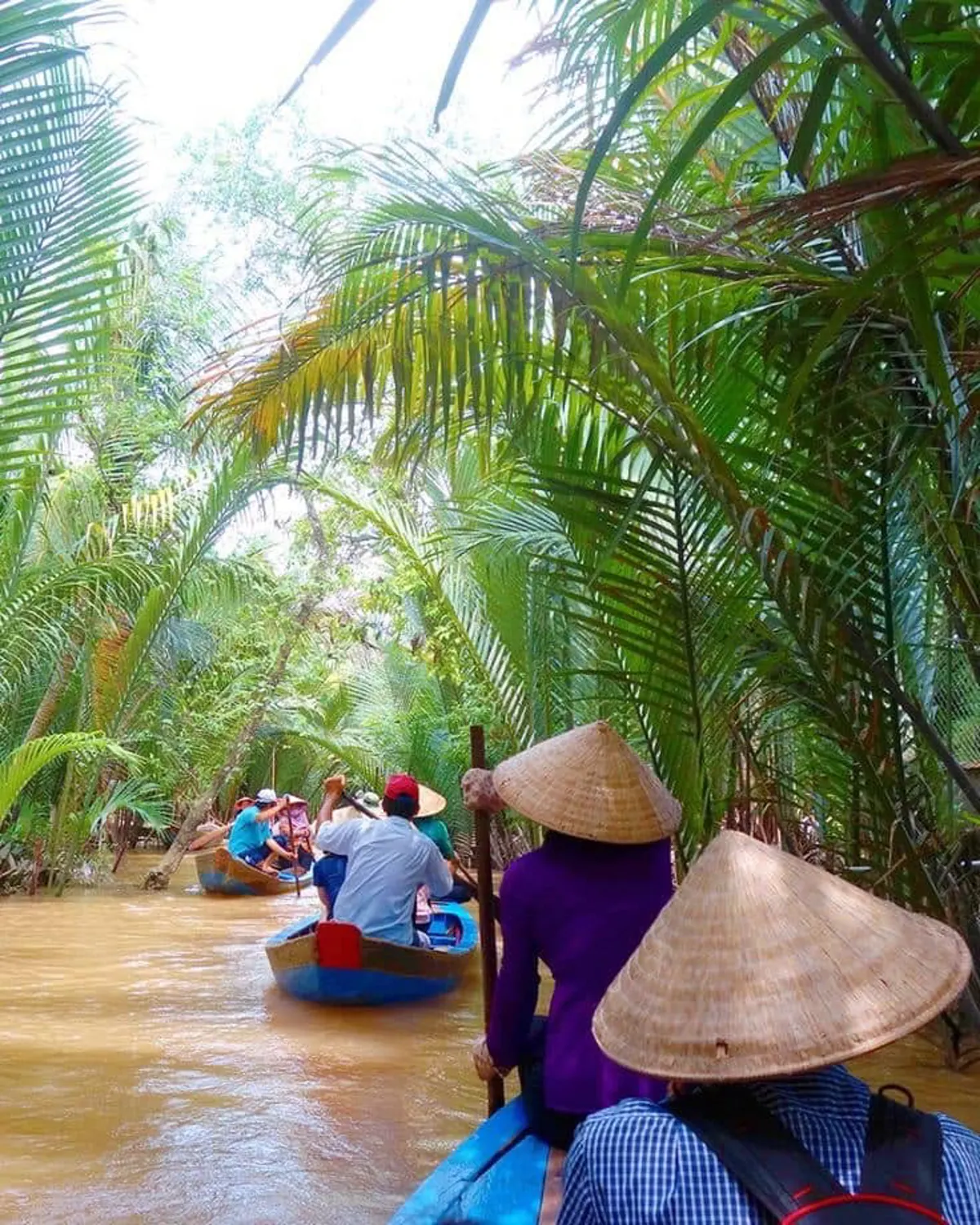
A trip to the Mekong Delta provides an understanding of the local life and rural character of the Vietnamese countryside, characterized by winding waterways, tranquil riverside villages, traditional workshops, and historical remnants. A long-tail boat journey along the Mekong waterways, specifically the Ham Luong River, is a common activity. Stops often include a coconut processing workshop and a mat weaving house, where visitors can observe the creation of sedge mats. The serene atmosphere of the Mekong Delta can be enjoyed by exploring the region, perhaps by riding a “xe loi” (a type of motorized rickshaw) to visit exotic fruit farms. After a local lunch, a sampan boat ride through narrow canals offers further exploration of the delta. The day typically concludes with an overnight stay in Can Tho, the largest settlement in the delta.
Day 5: Exploring the Floating Market
The following day begins early with a motorboat trip to the Cai Rang Floating Market, a notable market on the Mekong River. After breakfast at the hotel, the motorboat transfers travelers to the market, where local food can be sampled, and fruits purchased directly from vendors in smaller boats. Following the market tour, lunch is typically served at a restaurant on the return route to Ho Chi Minh City.
Tips and Recommendations: The Saigon River is often described as beautiful and romantic in the evening. A luxury Saigon River cruise with dinner on board is suggested for relaxation after a day of touring.
Day 6: Final Day in Ho Chi Minh City and Departure
The last day in Ho Chi Minh City offers a chance to experience the city waking up with a “Good Morning Saigon” tour. This tour often utilizes a local form of transport (an open-style van without air-conditioning) to visit Tao Dan Park, where residents engage in morning exercises. Within the park, a small pagoda often hosts locals performing daily prayers. For those interested in local flavors, savoring a “café sua da,” a distinctive Saigon coffee drink, from a coffee shop balcony while observing local life is a popular activity. The tour continues with a walk through a local wet market, where vendors sell a variety of goods from fresh produce to household items. This provides a final opportunity to purchase souvenirs before transferring for departure.
Frequently Asked Questions
What is the best region for a first-time visitor to Vietnam with 6 days?
For a first-time visitor with only six days, the Northern region is often recommended. It offers a rich blend of historical sites in Hanoi, cultural experiences in Sapa, and the iconic natural beauty of Halong Bay and Ninh Binh, providing a comprehensive introduction to Vietnamese culture and landscapes.
How much budget is suggested for a 6-day trip to Vietnam?
Based on 2019 data from the source material, a suggested budget for a 6-day trip varies by region: Northern Vietnam from US $500 per person, Central Vietnam from US $400 per person, and Southern Vietnam from US $600 per person. These figures are estimates and can fluctuate based on travel style, accommodation choices, and activities.
What transportation methods are commonly used for these itineraries?
Transportation methods vary by region. Northern itineraries typically involve cars for transfers between cities and a cruise for Halong Bay, with an overnight train for Sapa. Central Vietnam utilizes cars, boats (e.g., Perfume River, Thu Bon River), and cable cars (for Ba Na Hills). Southern Vietnam primarily uses cars and boats (for the Mekong Delta and floating markets).
Can I combine regions for a 6-day Vietnam trip?
While it is technically possible to combine regions, it is generally not advisable for a 6-day trip. Vietnam is a long country, and inter-region travel consumes significant time. Focusing on one region allows for deeper exploration and a more relaxed pace, preventing the trip from feeling rushed and overly reliant on transit.
What should I consider packing for a 6-day trip to Vietnam?
Packing essentials for a 6-day trip to Vietnam include comfortable walking shoes, light clothing suitable for a tropical climate, rain gear (especially during monsoon seasons), insect repellent, sunscreen, and a hat. For visits to temples and pagodas, modest attire covering shoulders and knees is recommended. If trekking in Sapa, appropriate hiking footwear and layers are important.